
The first dorm room I ever decorated was 11 by 13 feet, shared with a girl I had met exactly once on a video call, and I showed up with one giant duffel bag, a lamp that did not fit anywhere, and a vague Pinterest board.
By day three I had stepped on my own charger four times and hung a poster with the wrong tape, which took a chunk of paint with it when I peeled it off. Not my finest hour.
If you are staring at a cinderblock room and wondering where to even start, this guide to dorm room decorating for beginners is the one I wish I had been handed.
I am going to walk you through 17 ideas in the order I would actually do them, with real costs, real trade-offs, and the mistakes I watched (and made) so you can skip them.
A lot of dorm decorating is really small space living in disguise. If you want the bigger picture on making a tiny footprint work, my guide to small apartment living for beginners covers the mindset, and almost everything in it transfers to a dorm.
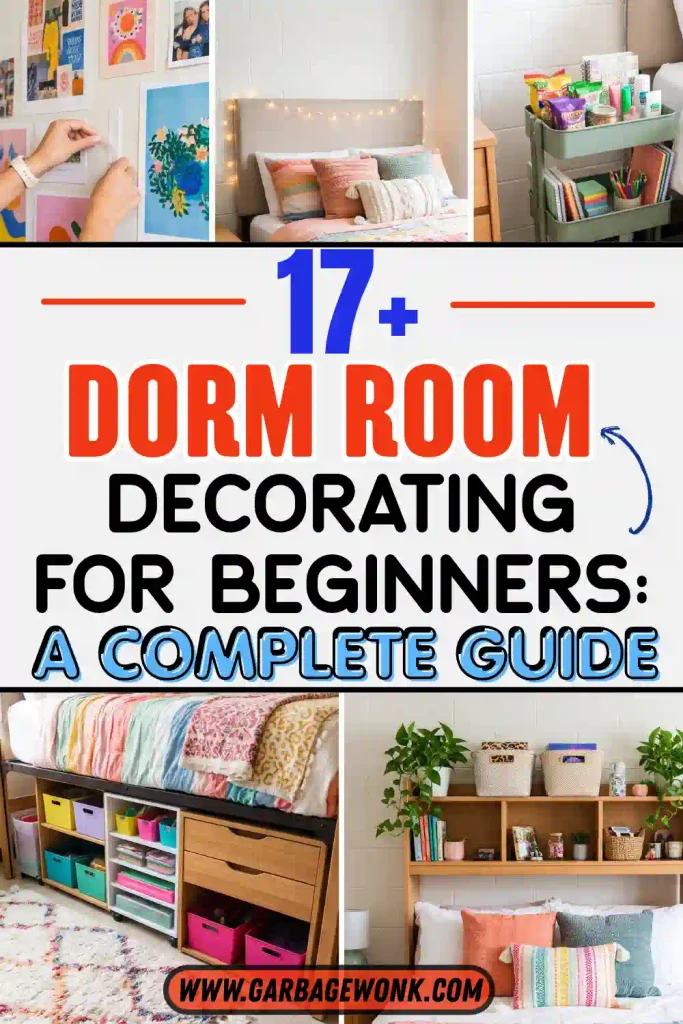
1. Measure First and Make a Plan With Your Roommate
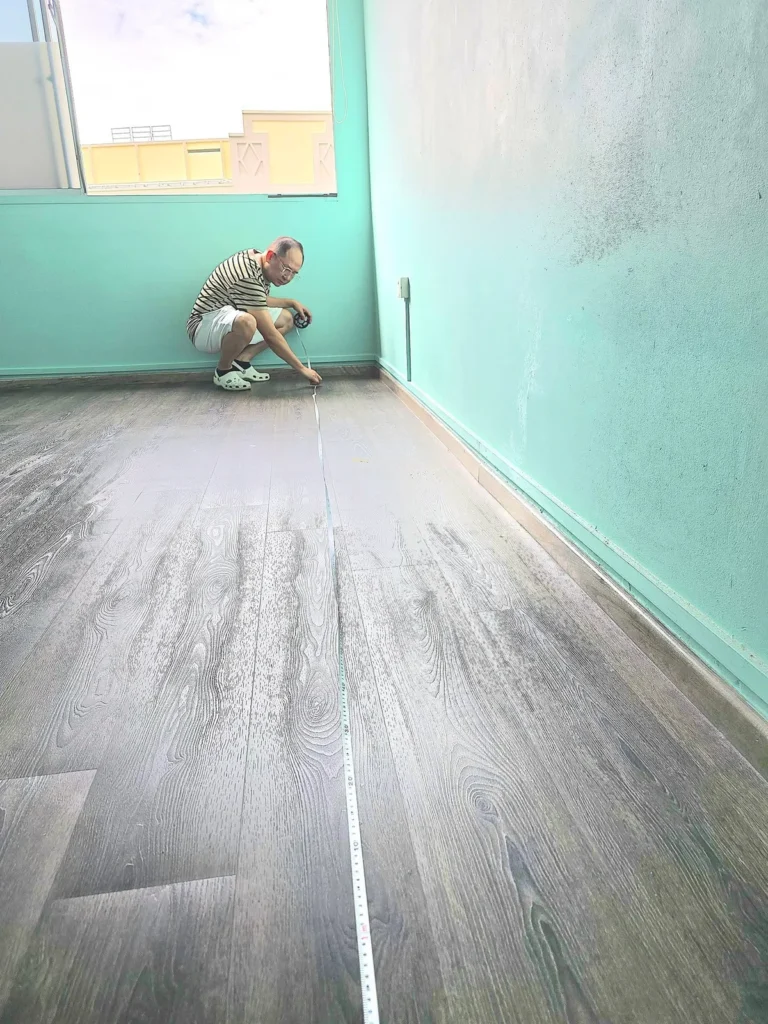
Before you buy a single throw pillow, find out what you are working with. Most schools post room dimensions, bed size, and a list of what is already provided on their housing page, and the bed is usually a twin XL (around 38 by 80 inches).
Skipping this step is how people end up with a rug that is two inches too wide for the floor space or a bookshelf that blocks the radiator.
Then text your roommate. You do not need a full design meeting, just three decisions: who brings the mini fridge, who brings the microwave, and a loose color palette so the room does not look like two different people fighting over one window.
My college roommate and I picked “white, sage, and wood tones” in a five minute call and it saved us from at least one clashing comforter situation.
Pro tip: Take a photo of the empty room on move-in day, including the outlets, window, and closet. Every layout decision you make later gets easier when you can look at the real thing instead of trying to remember it.
2. Start With Twin XL Bedding in a Palette You Can Build On
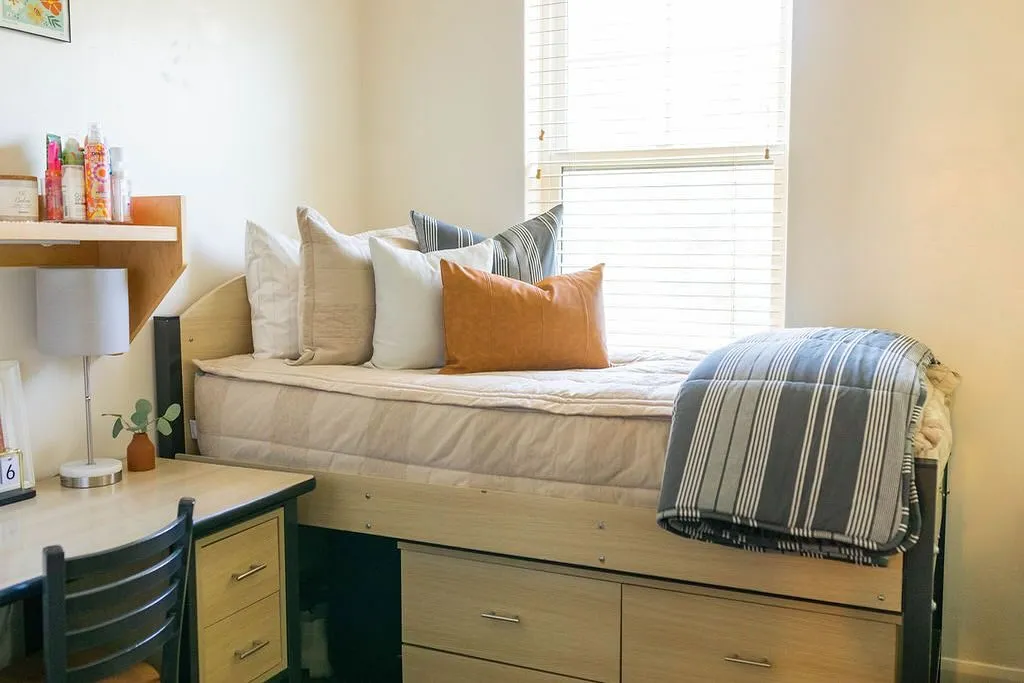
Your bed is the biggest visual surface in the room, so it sets the tone for everything else. Twin XL sheets are a different size than regular twin sheets, and this trips up nearly every first year.
Check the label before you check out, because returning bedding in September, when everyone else is also returning bedding, is its own special misery.
Pick one base color you genuinely like, then layer in two accents. For example, a white duvet, a sage throw, and a rust pillow gives you a room that looks pulled together without much effort.
I like linen-look cotton or washed microfiber for dorms because it hides wrinkles, and nobody has time to iron in a residence hall.
If you are weighing how much bedding to buy, two sheet sets and one comforter is plenty. More than that and you are just creating storage problems for yourself, which we will get to.
3. Add a Mattress Topper (Yes, It Is Worth It)
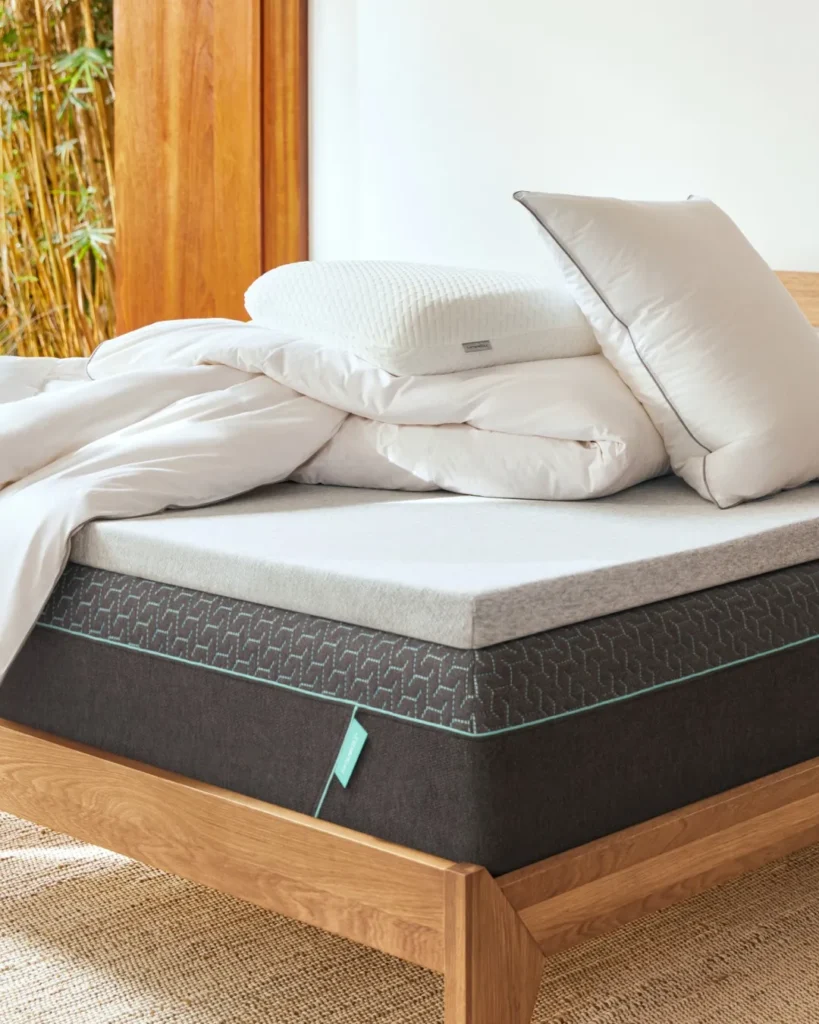
Dorm mattresses are usually vinyl-covered and firm in a way that feels like sleeping on a gym mat. A 2 or 3 inch memory foam or gel topper is, in my honest opinion, the single best comfort upgrade you can make, and it matters more than any decor item on this list.
Tired students make worse choices, and that includes decorating choices.
Expect to spend roughly $40 to $90 for a decent twin XL topper.
The cheapest egg-crate foam flattens in a semester, so if you can stretch your budget to the middle tier, do. Always use a waterproof mattress protector under your sheets so the topper stays clean and the housing office does not charge you for anything at move-out.
4. Lift Your Bed With Risers for Real Dorm Room Storage
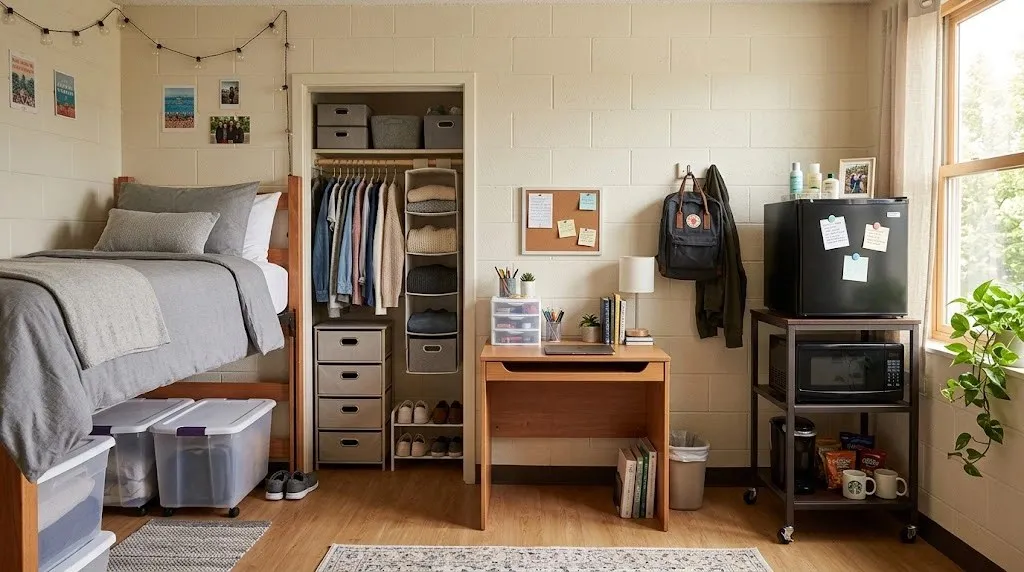
This is the move that changes how a tiny room functions. Raising your bed 6 to 8 inches gives you a huge hidden zone for rolling bins, shoes, a suitcase, even a small fridge.
Check your school’s rules first, because some housing departments cap how high you can raise a bed or require specific riser types, and some allow bed lofting while others do not.
My neighbor freshman year, Priya, put cheap plastic risers on her bed and stacked three flat rolling bins underneath, one for off-season clothes, one for snacks and supplies, one for shoes.
She said she had never realized how much of the floor she was wasting until she got it back. The trade-off is that a higher bed means a harder climb and less headspace, so test it before you commit if you are tall or have a low ceiling.
For a deeper look at furniture that earns its footprint, I put together a list of the best space saving furniture for small apartments that works just as well in a dorm.
Pro tip: Choose underbed bins with wheels and a lid, and measure the clearance before you buy. A bin that is half an inch too tall is just a very expensive paperweight.
5. Use Damage-Free Hooks and Strips for Renter-Friendly Decor
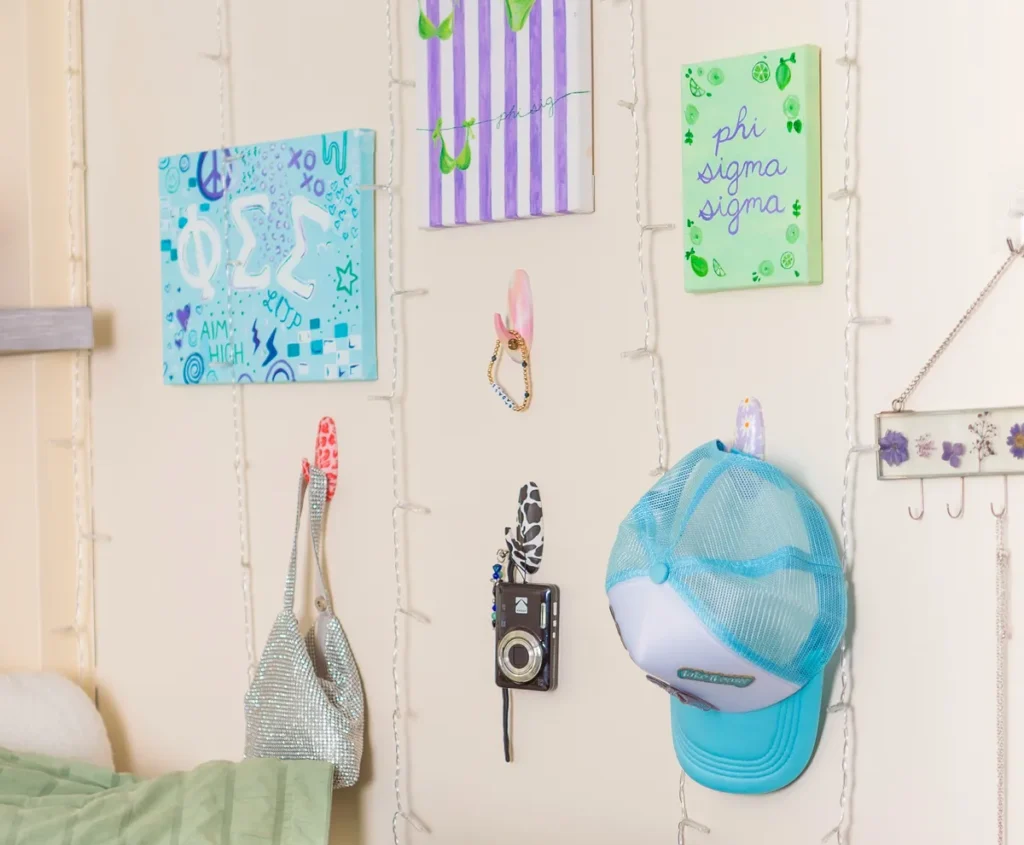
Most dorms ban nails, screws, and anything that leaves a mark, which is why damage-free wall decor is the backbone of dorm decorating. Adhesive hooks and strips are your best friends here, but only if you use them right.
Clean the wall with a little rubbing alcohol, press the strip for a full 30 seconds, and wait about an hour before hanging anything on it.
Pay attention to the weight rating on the package. A hook rated for a few pounds will not hold a heavy mirror, and I learned that at 2 a.m.
when mine crashed into my desk. Also be careful on painted cinderblock, because texture and cheap paint can make adhesives fail, so test one strip in a corner for a few days before you commit a whole wall to it.
Keeping the walls undamaged is also how you keep your deposit, which is a good reminder that a lot of dorm rules are the same renter rules you will deal with later in a first apartment.
6. Build a Gallery Wall or Tapestry Focal Point
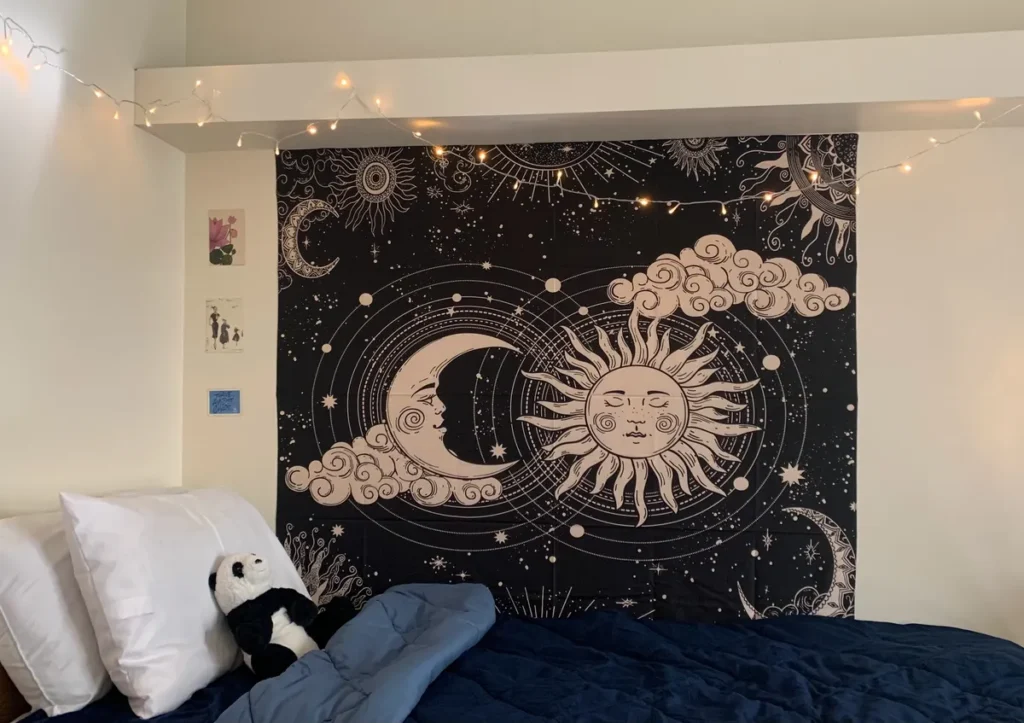
An empty white wall makes a dorm feel like a waiting room. You do not need to cover everything, just create one focal point above your bed or desk.
A tapestry is the fastest option, but a gallery wall of lightweight frames, prints, and photos feels more personal and more grown up.
Lay your arrangement out on the floor first, take a photo, then recreate it on the wall. Stick with frames in one or two finishes (all black, or black and light wood) so a mix of images still looks intentional.
I made a gallery wall of 9 mixed-size prints for about $35, mostly using printable art and thrifted frames, and it ended up being the thing people commented on first whenever they walked in.
If you are sharing a space and want a flexible layout, a lot of the same thinking shows up in my guide to studio apartment ideas for separating spaces, because both come down to making one room feel like it has zones.
7. Layer Your Lighting and Skip the Overhead Glare
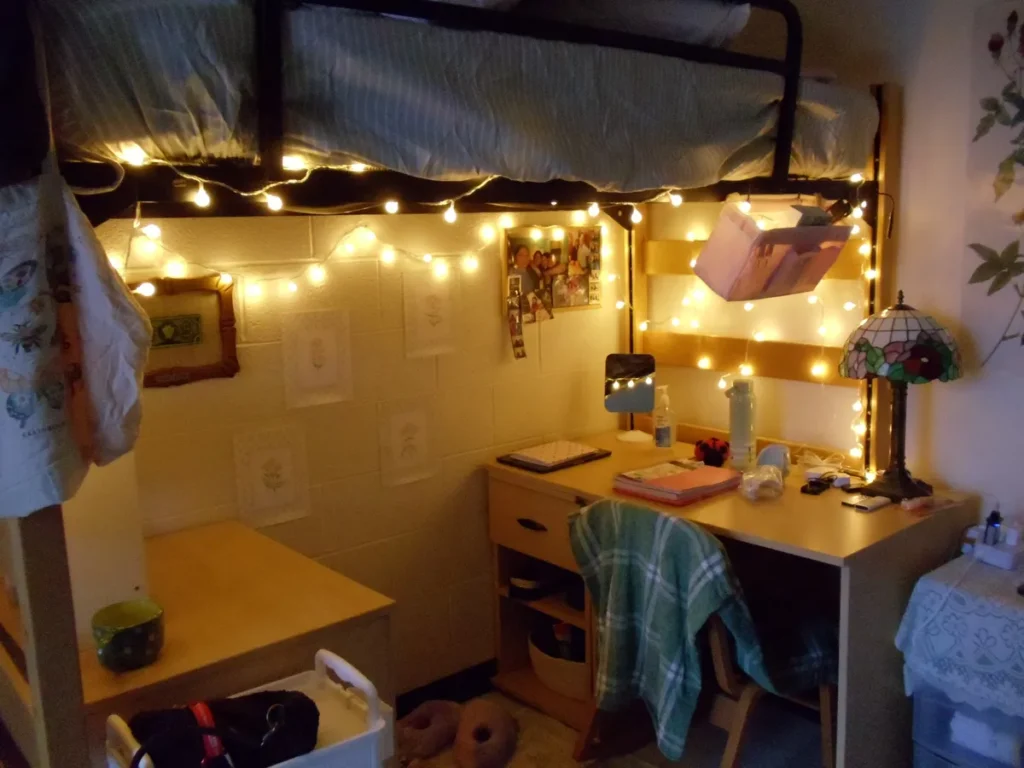
Dorm overhead lighting is usually a harsh fluorescent panel that makes everyone look unwell. Turn it off whenever you can and build light at eye level instead.
A small desk lamp for studying, a warm string light for atmosphere, and one soft lamp or clip-on light near the bed covers pretty much every situation.
Choose warm white bulbs, around 2700K, rather than cool white, which can feel clinical. Battery-powered or plug-in string lights are both fine, though plug-in versions are more reliable in a room where you do not want to be swapping batteries every few weeks. Check your school’s policy on string lights, since a few ban them for fire safety reasons.
Pro tip: Outlets are the real limiting factor in a dorm. Buy a surge-protected power strip with a long cord and, if your school allows it, USB ports built in. Many halls ban the cheap multi-plug adapters, so read the list before you buy.
8. Put Down a Rug to Warm Up the Floor
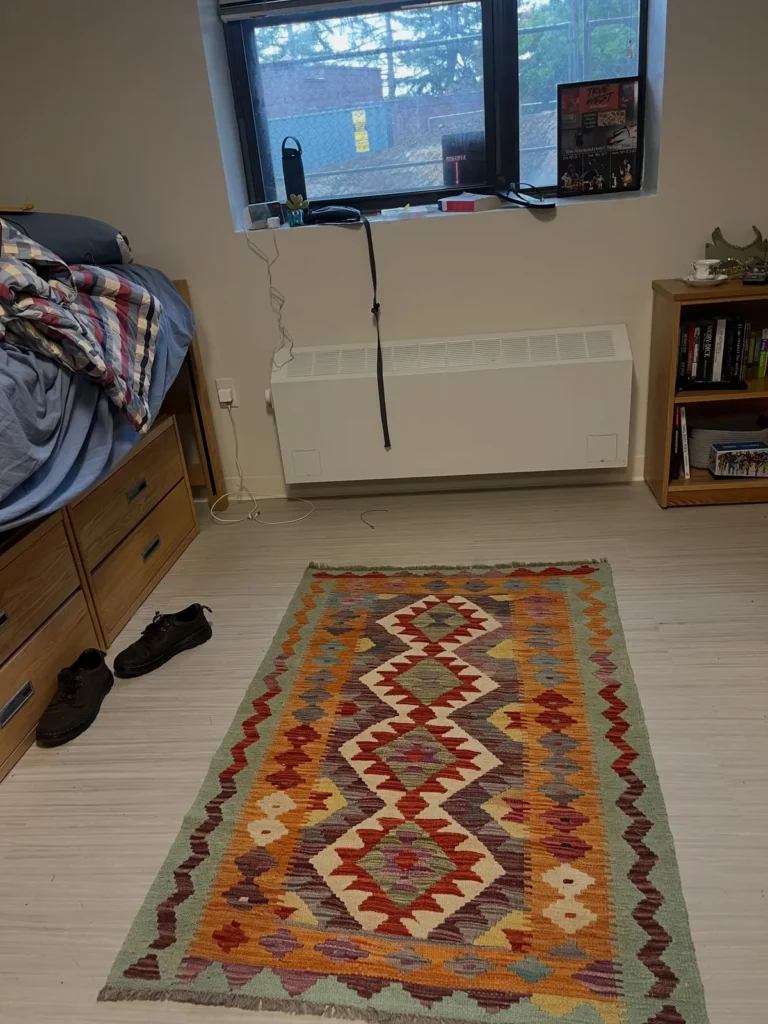
Dorm floors are usually cold, hard tile or thin carpet that has seen several thousand students. A rug instantly adds softness and color, and it makes that first-thing-in-the-morning barefoot step a lot less awful.
A 4 by 6 foot rug is the sweet spot for most standard rooms, large enough to anchor the space without running under both beds.
Go for a flat weave or low pile, since a thick shag rug will trap dust and is a pain to vacuum with a borrowed vacuum.
Washable rugs are worth the extra few dollars if you eat in your room, because dorm life involves a lot of spilled ramen. Add a non-slip pad underneath so the corners do not curl and trip you on the way to the door.
9. Try Peel-and-Stick Wallpaper for One Accent Spot
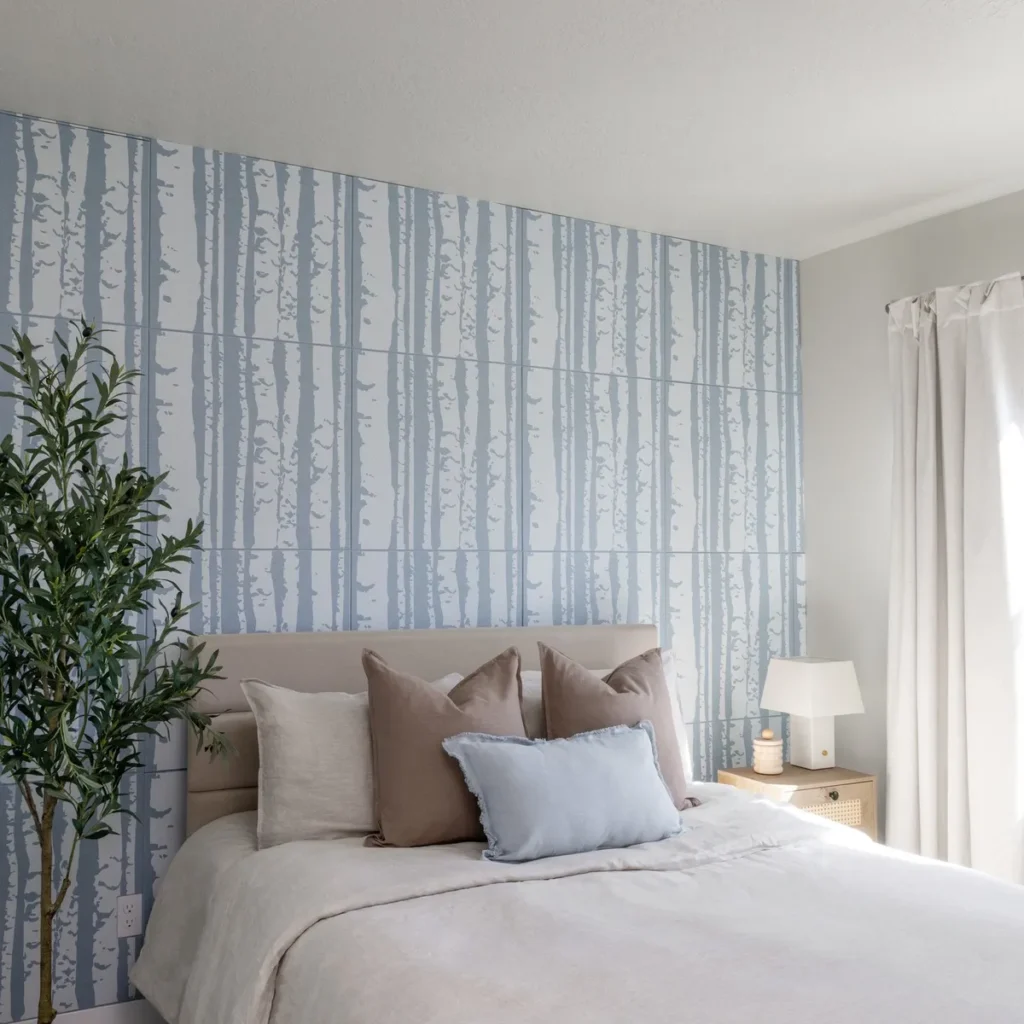
Removable wallpaper is the closest thing to a renovation you can get in a room you do not own.
Use it on a small area, like behind your desk or the headboard wall, instead of the whole room, since a large amount gets expensive and is tricky to align with someone else in the room.
Be honest about the surface you are working on. Smooth painted drywall holds peel-and-stick well, while heavily textured or cinderblock walls often do not, and removing it can damage cheap paint.
Test a small sample for a week, then peel it to see what happens. Expect to spend $25 to $60 for a roll that covers a modest accent area.
10. Choose Multi-Functional Furniture for Small Space Organization
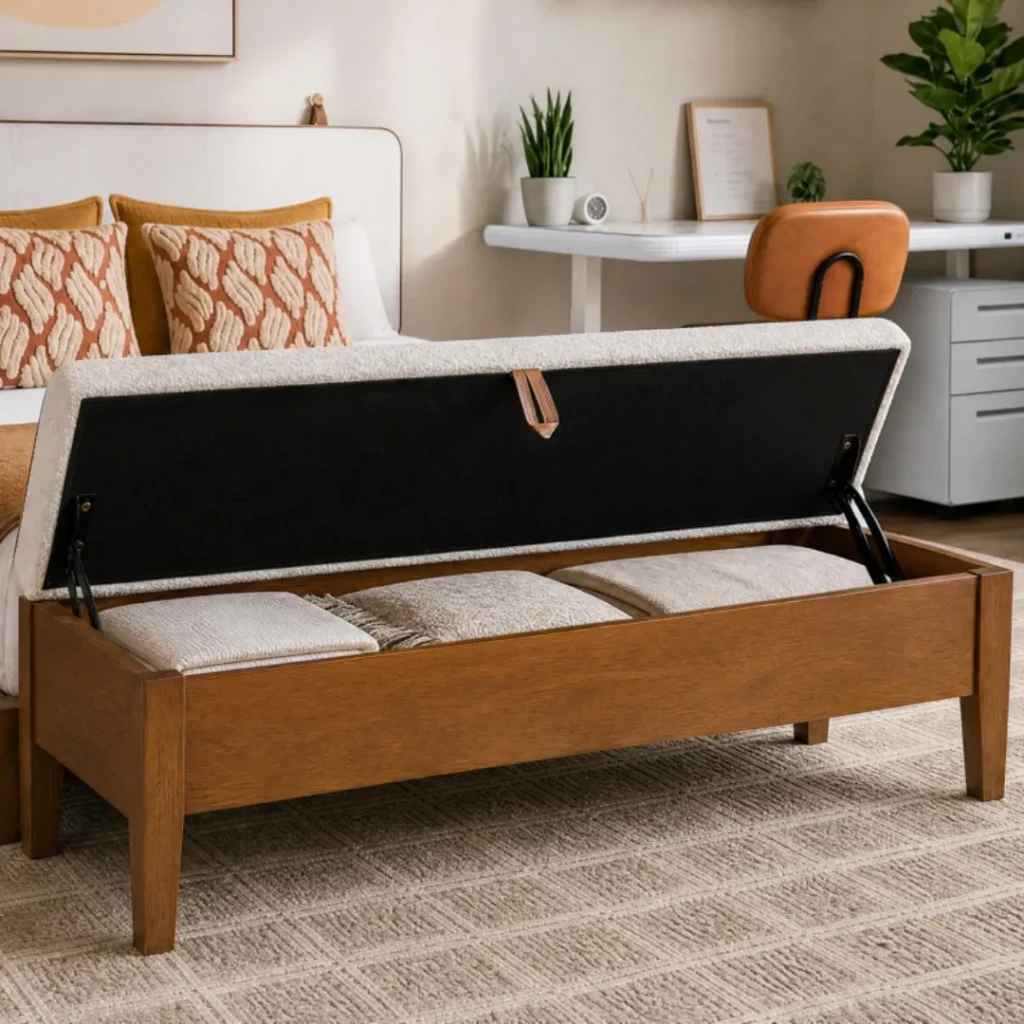
In a small room, every piece of furniture should do at least two jobs. A storage ottoman can be a seat, a footrest, and a hidden spot for extra blankets.
A folding desk chair that tucks under the desk, a cube shelf that doubles as a nightstand, or a bench with a lift-up lid are the kind of pieces that earn their place.
The trap here is buying furniture that is cute but fragile, since dorm pieces get moved at least twice a year.
Look for sturdy frames and check reviews for people who actually assembled it themselves, because flat-pack furniture quality varies wildly. My own guide to multi-functional furniture for small spaces goes deeper on which pieces hold up.
11. Set Up a Desk Zone You Will Actually Use
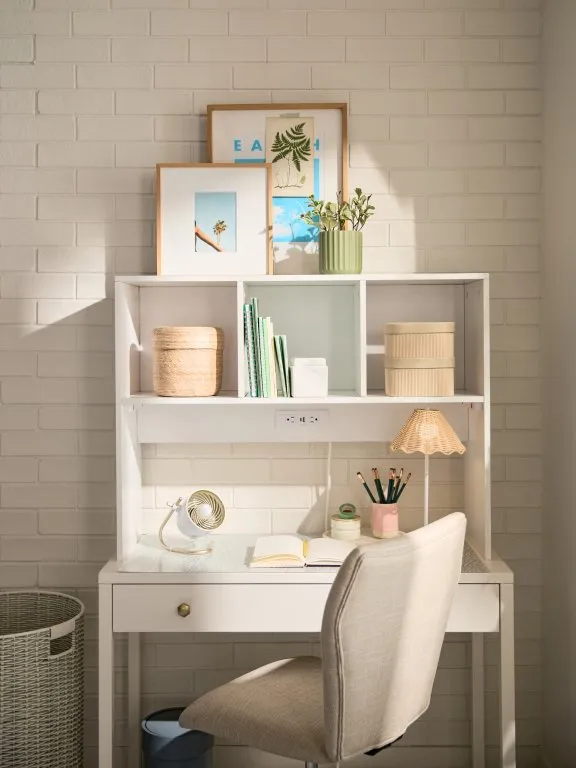
Your desk does not have to look like a productivity influencer’s setup, but it does need to work.
Put the lamp on the side opposite your writing hand, keep a small tray or cup for pens, and add a monitor riser or laptop stand if your desk is the standard cramped slab. Good posture is not glamorous, but your neck will thank you in November.
A pinboard or a cork strip above the desk keeps notes, deadlines, and photos in view without eating surface area.
I kept a small acrylic calendar on the wall and it saved me from at least two missed deadlines.
Keep cables tidy with a few adhesive clips, because a tangle of cords makes even a nice desk look chaotic.
12. Organize the Closet Like You Are Short on Space (Because You Are)
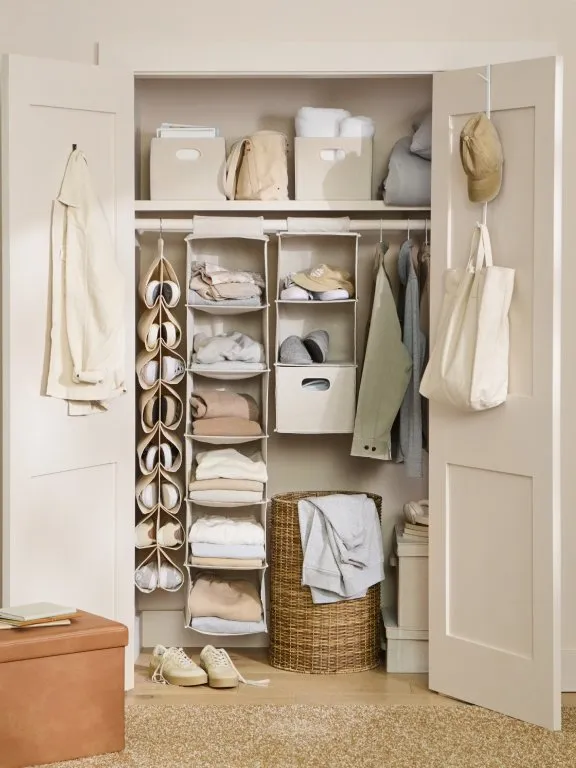
Dorm closets are often shallow, sometimes just a wardrobe with a rod and a shelf. Switching to slim velvet hangers frees up nearly a third of your hanging space, and a hanging shelf organizer adds a few extra cubbies without taking any floor.
Fold bulky items like sweaters and keep hanging space for the things that wrinkle.
Use the space above the rod, too. A pair of stackable bins on the closet shelf is a good home for out-of-season gear, and a shoe organizer on the inside of the door handles the rest.
The comparison below shows which options tend to make sense for which problem.
| Storage Option | Best For | Typical Cost | Trade-Off |
|---|---|---|---|
| Slim velvet hangers | Maximizing a tiny rod | $15 to $25 | Heavy coats can slip off |
| Hanging closet shelves | Sweaters, tees, accessories | $12 to $30 | Sags if overloaded |
| Rolling underbed bins | Off-season clothes, shoes | $20 to $40 | Need bed risers to fit well |
| Over-the-door organizer | Shoes, toiletries, snacks | $10 to $25 | May not fit thick doors |
| Stackable cube shelves | Books, bins, display | $30 to $60 | Takes up floor space |
Pro tip: Hang your most-worn items at the front and swap the rest by season. Most people wear a small rotation of clothes anyway, and this keeps the rest from being a daily obstacle course.
13. Go Vertical With Over-the-Door and Wall Storage
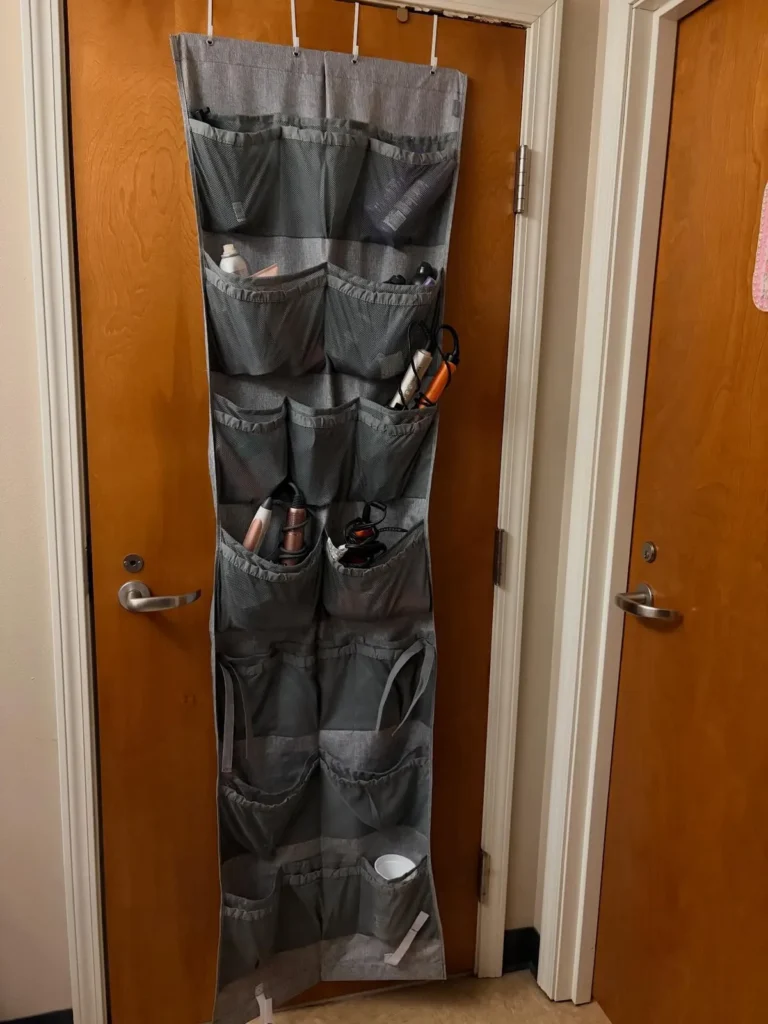
When floor space is nearly nonexistent, you have to use the walls and the backs of doors. Over-the-door hooks and organizers are the classic dorm move, but not all of them are made equal.
I bought a cheap metal over-the-door rack my first week, loaded it with towels and a heavy bag, and it pulled the door out of alignment within a week. Check the door thickness and weight limit before you buy.
Wall-mounted options that rely on adhesive can work well for lightweight items like a shower caddy, small shelves, or a key and mail organizer by the door.
A slim over-the-door mirror with hooks is a two-in-one worth considering. Keep anything heavy on the floor or on a freestanding shelf, and save the walls for the light stuff.
14. Dress the Window With Curtains for Privacy and Softness
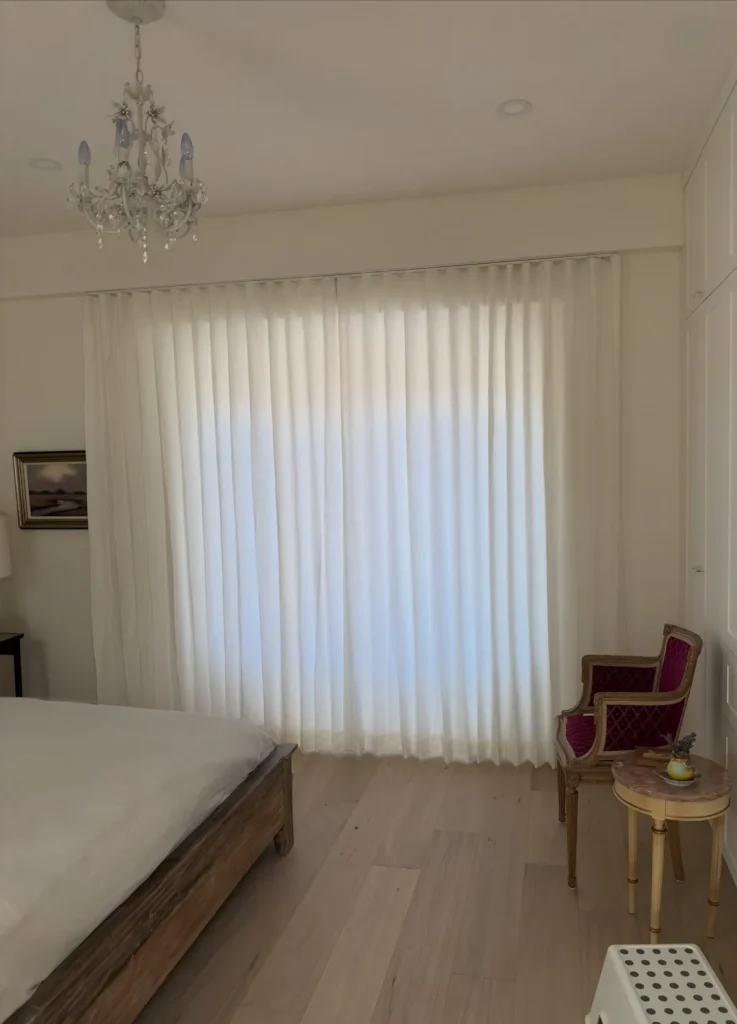
Dorm windows often come with flimsy blinds that do very little against morning sun or a hallway full of curious neighbors.
Adding a curtain panel or two softens the whole room and hides that institutional blind look.
Tension rods and adhesive hooks keep things damage-free, and you can often hang curtains just above the window frame to make the ceiling feel taller.
Blackout curtains are a quiet game changer if you have an early class or a roommate who stays up late.
They also help with temperature, keeping the room a bit cooler in summer and warmer in winter. Light linen-look panels are a good option if you want brightness during the day with a bit of privacy.
15. Add Plants That Can Survive a Dorm Room
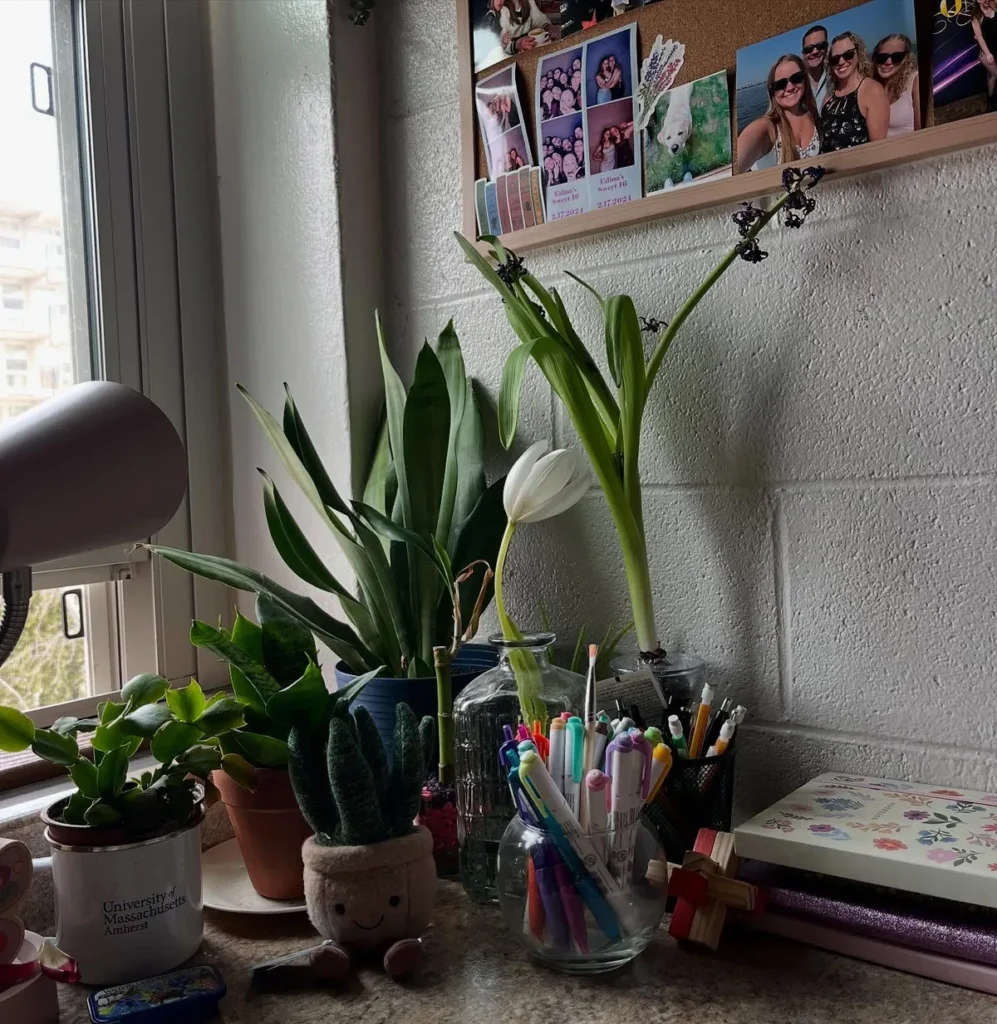
Plants make a room feel alive, and they are easier than you think if you pick the right ones. A pothos, snake plant, or ZZ plant can tolerate low light and forgetful watering, which describes most dorm rooms and most first-year schedules. A small pot on the desk or windowsill is plenty to start.
If you travel a lot or your windows get almost no light, a good faux plant is nothing to be embarrassed about.
Choose ones with a matte finish and a little visual variety, since shiny plastic leaves are easy to spot from across the room.
Real or fake, plants are one of the cheapest ways to bring softness to a hard-edged room, usually for under $15.
16. Use a Mirror to Make a Small Room Feel Bigger
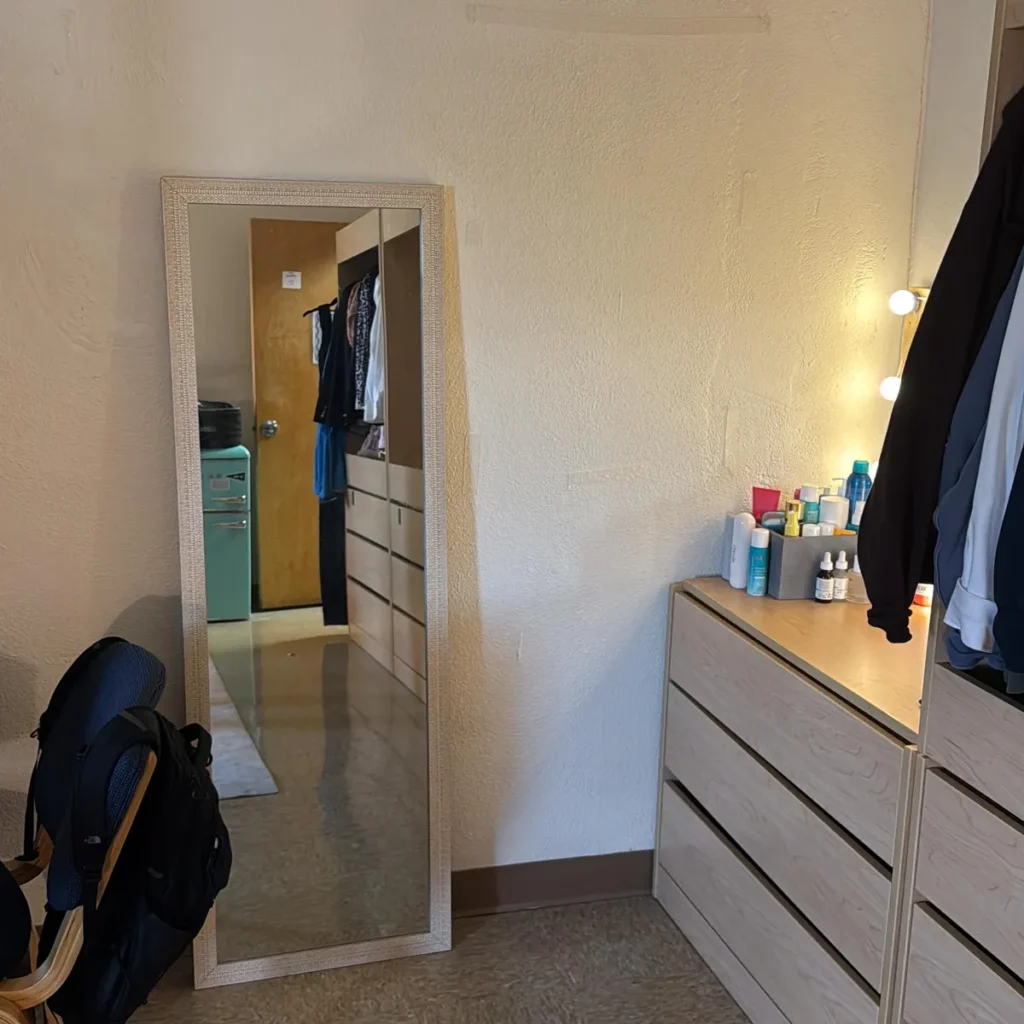
A full-length mirror does a lot of work in a dorm. It is functional for getting dressed, and it reflects light and visually opens the room.
Lean a lightweight one against the wall or mount it with heavy-duty adhesive hardware designed for mirrors, not a random strip you found in a drawer.
Place it where it reflects a window or a lamp rather than a pile of laundry, because a mirror will double whatever it points at.
If you cannot fit a big floor mirror, a round wall mirror above the desk or by the door works nicely too. Acrylic mirrors are lighter and safer for a shared room, though the reflection is slightly less crisp than glass.
17. Create a Shared Zone and Personal Zones With Your Roommate
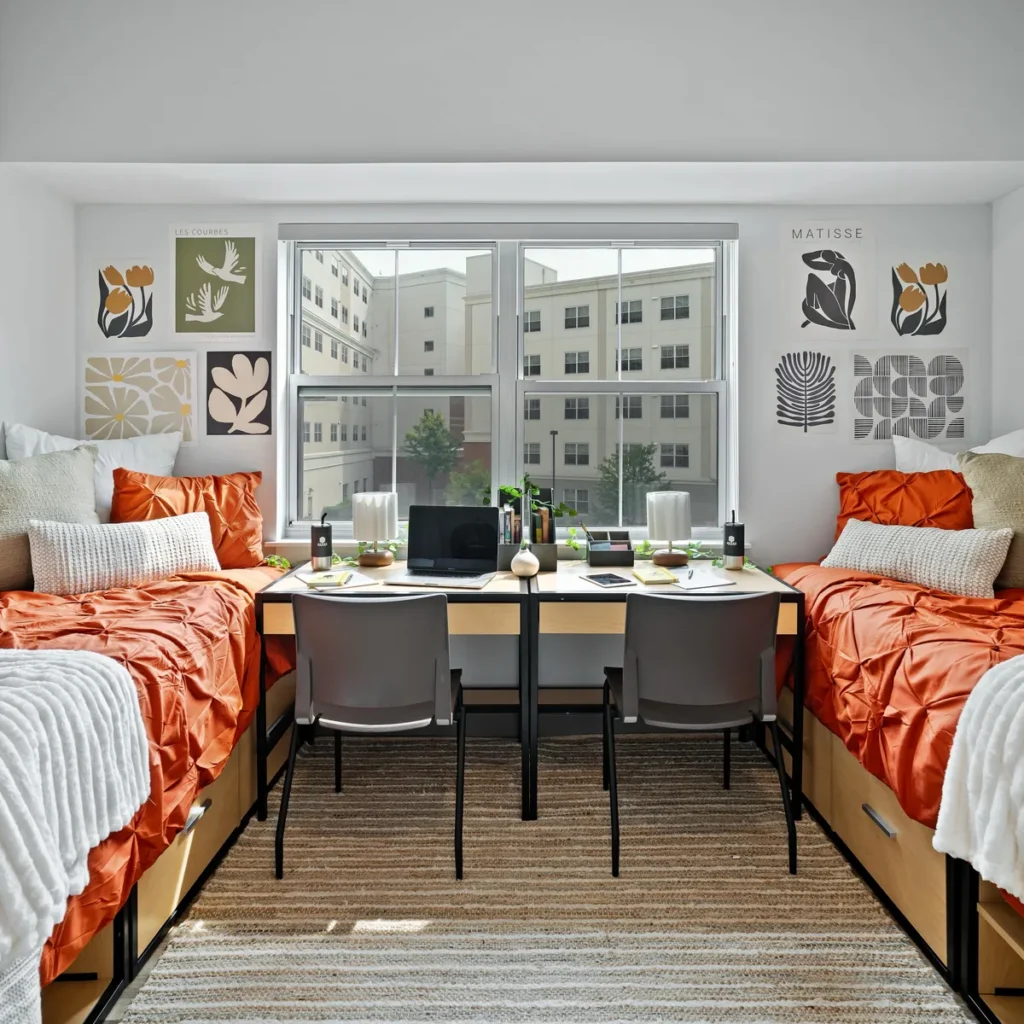
The best-looking dorm rooms I have seen are not the most expensive ones, they are the ones where both people have a space that feels like theirs and a shared area that feels easy.
Decide early what is shared, like a rug, a mini fridge, or a small shelf, and what is personal, like the bed and desk wall. Even a simple curtain on a tension rod around a bed can give you a private corner.
This is basically the same logic used in studios, and if you want to see how people carve one room into zones without building anything, my post on how to divide a studio apartment has ideas you can scale down for a dorm.
A bookshelf at the foot of a bed, a folding screen, or a curtain panel can all create a bit of privacy without making the room feel smaller.
Pro tip: Put the quiet rules in writing, even loosely. Things like guest hours, lights out, and music volume are way easier to agree on in week one than in week six when someone is already annoyed.
How Much Does Dorm Room Decorating Cost? (Budget Breakdown)
Here is where I will be real with you. You can do dorm room decorating on a budget and still end up with a space you like, but you need to know where the money actually matters. Spend on sleep (topper, sheets) and storage first, and treat wall decor and extras as the fun layer on top.
| Budget Tier | What You Get | Approximate Total |
|---|---|---|
| Bare Minimum | Bedding, topper, damage-free hooks, a lamp, one poster or tapestry | $100 to $175 |
| Comfortable | Everything above plus rug, bed risers, bins, curtains, mirror, a plant | $250 to $400 |
| Fully Styled | Everything above plus gallery wall, peel-and-stick accent, storage ottoman, upgraded desk setup | $450 to $700 |
These numbers are rough and vary by where you shop, but they give you a realistic idea. Thrift stores, campus buy-nothing groups, and hand-me-downs from older students are the best way to stretch any tier.
I picked up a perfectly good lamp and a set of frames from a thrift store for under $12 combined.
Common Dorm Decorating Mistakes to Avoid
After helping a few younger cousins and friends set up their rooms, I see the same errors again and again.
Buying everything before you see the room is the big one, followed closely by ignoring the school’s rules and having to return items. Buying regular twin sheets instead of twin XL is a very close third.
The other mistake is overbuying decor and underbuying storage. A room full of cute things and nowhere to put your actual belongings looks cluttered fast.
If you are ever unsure, choose the storage piece over the decorative one and add the pretty stuff once the room is functioning.
Dorm Room Decorating FAQs
What should I buy first when decorating a dorm room?
Start with the things that affect sleep and function: twin XL bedding, a mattress topper, and basic storage like bins and hangers. Decor comes after you know what the room actually needs.
How do I decorate a dorm room without damaging the walls?
Use adhesive hooks, removable strips, and tension rods, and follow the weight limits on the package. Clean the wall surface first and let the adhesive set before hanging anything.
How can I make a small dorm room look bigger?
Use a full-length mirror, keep colors light and cohesive, raise your bed to open up floor space, and avoid cluttering surfaces. Vertical storage also keeps the floor feeling open.
How much should I spend on decorating my dorm room?
Most students spend somewhere between $150 and $500 depending on how much they bring from home. Prioritize bedding, storage, and lighting, and add decor over time.
Can I use string lights in a dorm?
It depends on your school. Many allow plug-in LED string lights, while some ban them. Check your housing guidelines before you buy.
How do I decorate a dorm room with a roommate?
Agree on a loose color palette, decide what is shared, and divide the rest. Personal zones around each bed and desk help both people feel at home.
What is the best way to add storage to a dorm room?
Raise your bed for underbed bins, use slim hangers and hanging shelves in the closet, and add over-the-door organizers. Go vertical wherever you can.
What I Would Do First If I Were Starting Over
If I were moving into a dorm tomorrow, I would measure the room, text my roommate about colors, and buy exactly four things before anything else: a mattress topper, twin XL sheets, bed risers with rolling bins, and a warm desk lamp.
Everything else can wait a few weeks until I know how I actually live in the space.
The best part of dorm room decorating for beginners is that nothing has to be perfect on day one.
Your room will change as you figure out what you use, what you trip over, and what makes you want to come back after a long day. Start with comfort and storage, add the pretty parts slowly, and give yourself permission to rearrange in October.


Leave a Reply