
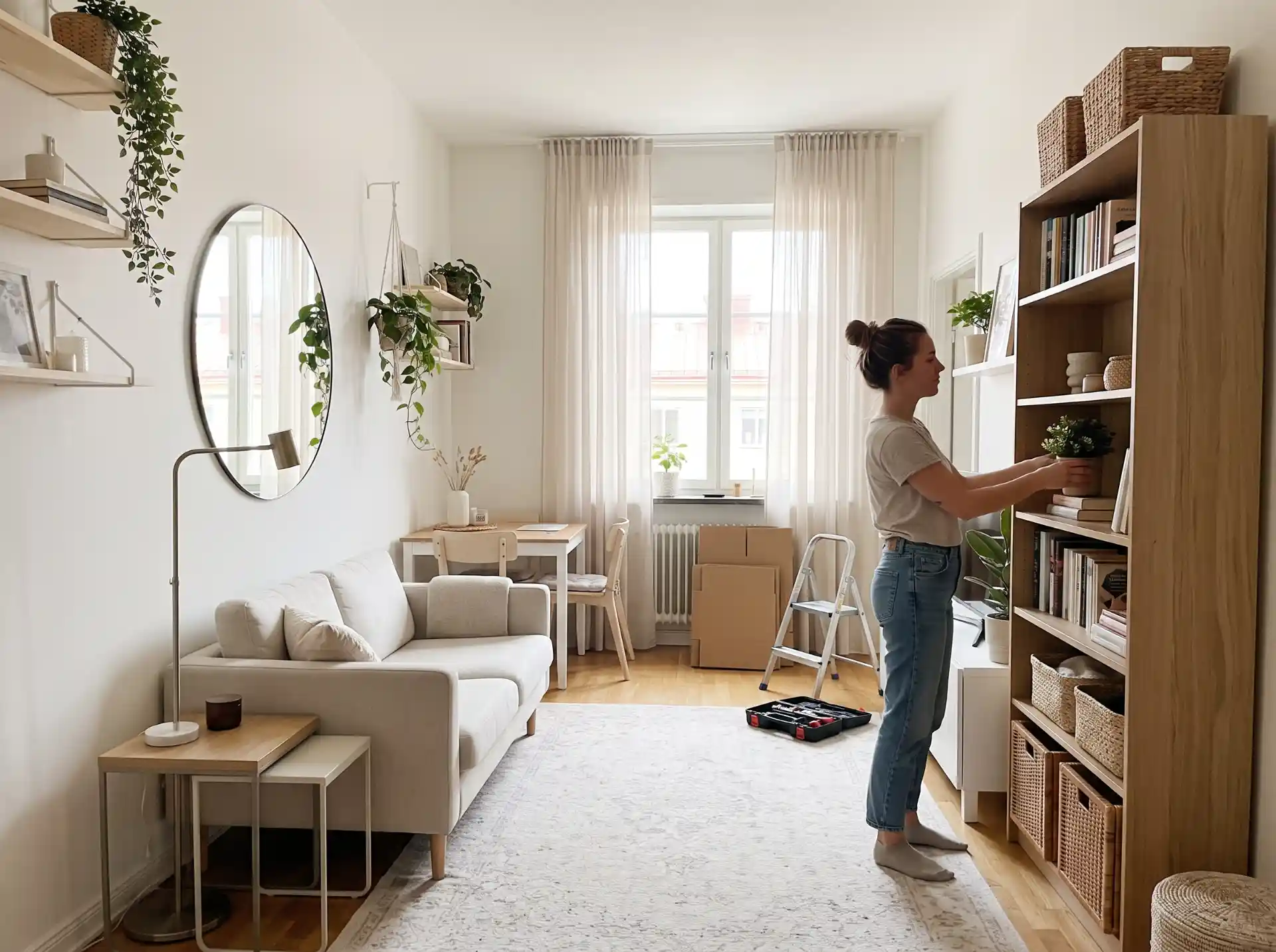
My first apartment after college was 410 square feet, and the closet was basically a suggestion.
For the first four months I blamed the space. Too small, too dark, too many corners. Then my friend Dana came over, stood in the doorway for about three seconds, and said, “Your room isn’t small, it’s just full.” She was right, and it was a little rude, and it changed how I think about every small space I’ve lived in since.
Here’s the thing: if you want to make a small apartment feel bigger, you almost never need more square footage.
You need clearer sightlines, better light, and fewer things competing for the same eye-level real estate. All three of those are fixable in a single weekend, on a renter’s budget, without touching a wall you’d have to repaint before you move out.
This is the exact order I’d do it in if I were starting over: a Friday-night edit, a Saturday of light and layout changes, and a Sunday of finishing touches.
I’ve included rough costs, a table to help you decide where to spend money, and the mistakes I made so you can skip them. Not every tip will fit your place, so take what works.
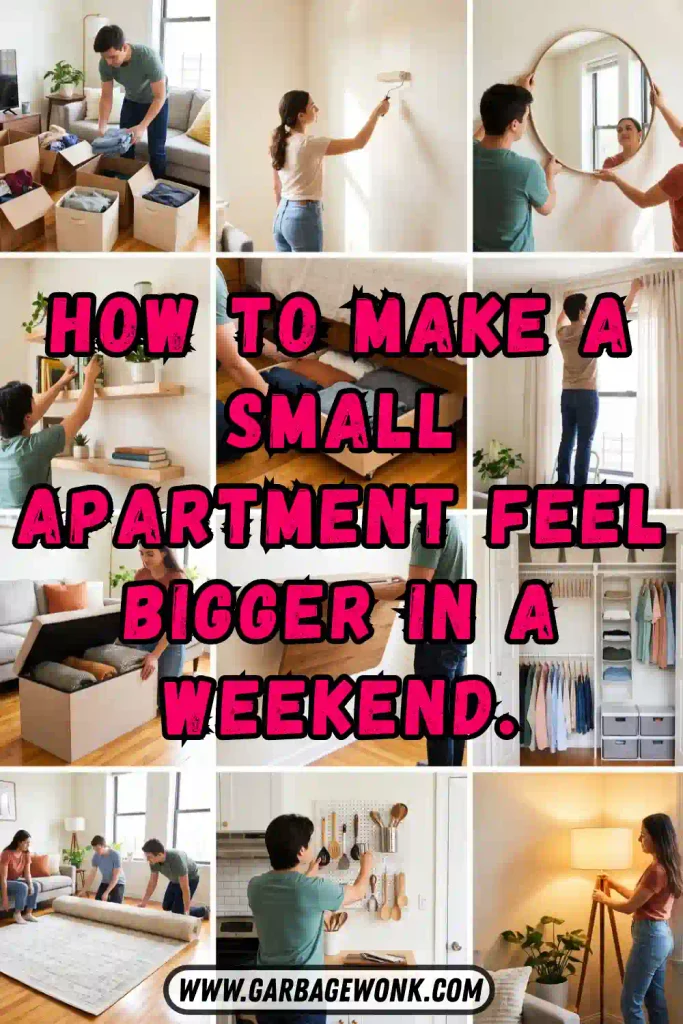
The Weekend Plan at a Glance
I’m a fan of doing things in the order that gives you the biggest payoff first. Light and clutter do more than any piece of furniture, so they come before anything you have to buy.
- Friday night (1-2 hours): Clear surfaces, edit what’s visible, make a donate pile
- Saturday morning: Rearrange furniture and open up your floor and window lines
- Saturday afternoon: Fix your lighting
- Sunday: Mirrors, color, and the finishing details
If you only have a few hours, do Friday and the lighting section. That alone gets you about 70% of the effect.
Friday Night: Edit Before You Decorate
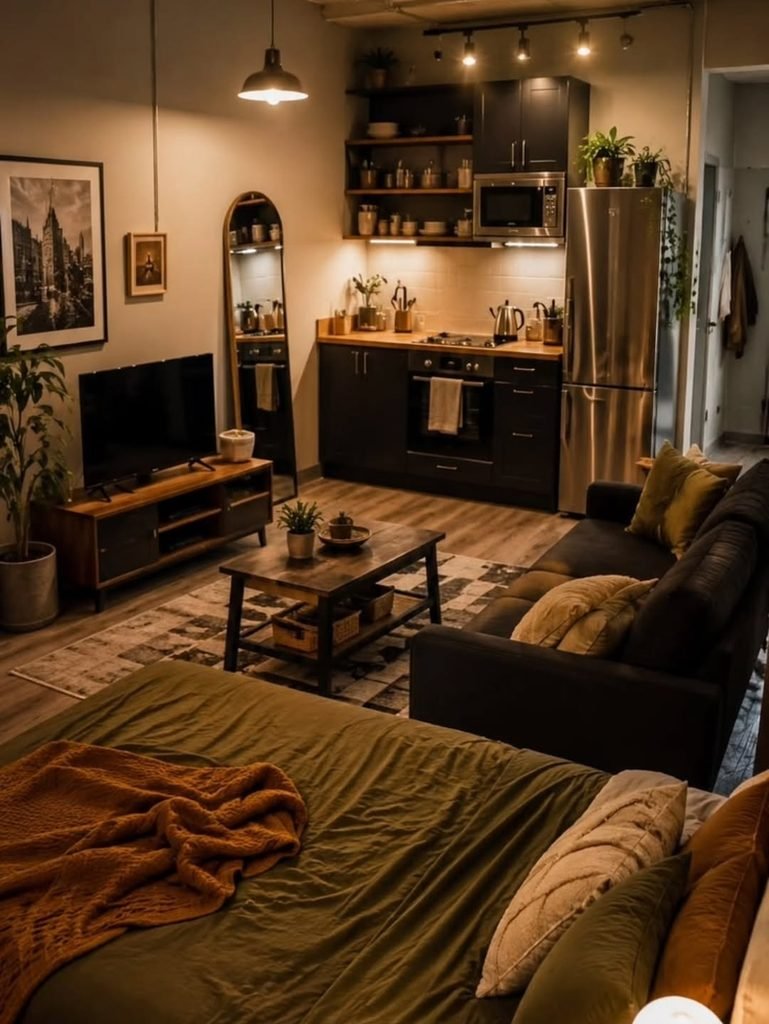
Why clearing visible clutter matters more than organizing it
A small apartment feels cramped when your eye has nowhere to rest. Every object on a counter, shelf, or windowsill is a tiny visual interruption, and in 400 square feet you can see all of them at once.
Organizing clutter into cute baskets is a fine second step, but your first step is removing things from sightlines entirely.
How to do the Friday edit
Start with the surfaces you see first when you walk in: entryway table, kitchen counters, coffee table, nightstand. Take everything off. Then put back only what you use daily plus one or two things you actually like looking at. Everything else goes into one of three piles: store, donate, or trash.
I do this with a timer. Forty-five minutes per room is plenty, and the timer keeps you from sitting on the floor reading old birthday cards, which is where I lost most of one Friday in 2021.
The store pile is where small-space living gets real. If you don’t have a closet to spare, this is where vertical apartment organization earns its keep: under-bed storage bins, a slim rolling cart, or over-the-door hooks. Which brings me to a warning.
Pro tip: Skip the over-the-door shelving racks if your doors are hollow-core, which is common in rentals. I bought a $22 one, loaded it with towels, and the whole thing was on the floor within a week. Adhesive hooks and a sturdy over-the-door hook rail (the metal kind, not plastic) are the safer bet.
Pick one “empty” surface per room
This is the rule I’d tattoo on my arm if I were braver. In every room, designate one surface that stays mostly empty. In my living room it’s the coffee table, which holds a candle and nothing else. That one clear spot gives your eye somewhere to land and makes the whole room feel calmer, even if the bookshelf next to it is a little chaotic.
Saturday Morning: Rearrange Your Furniture to Open Up the Floor
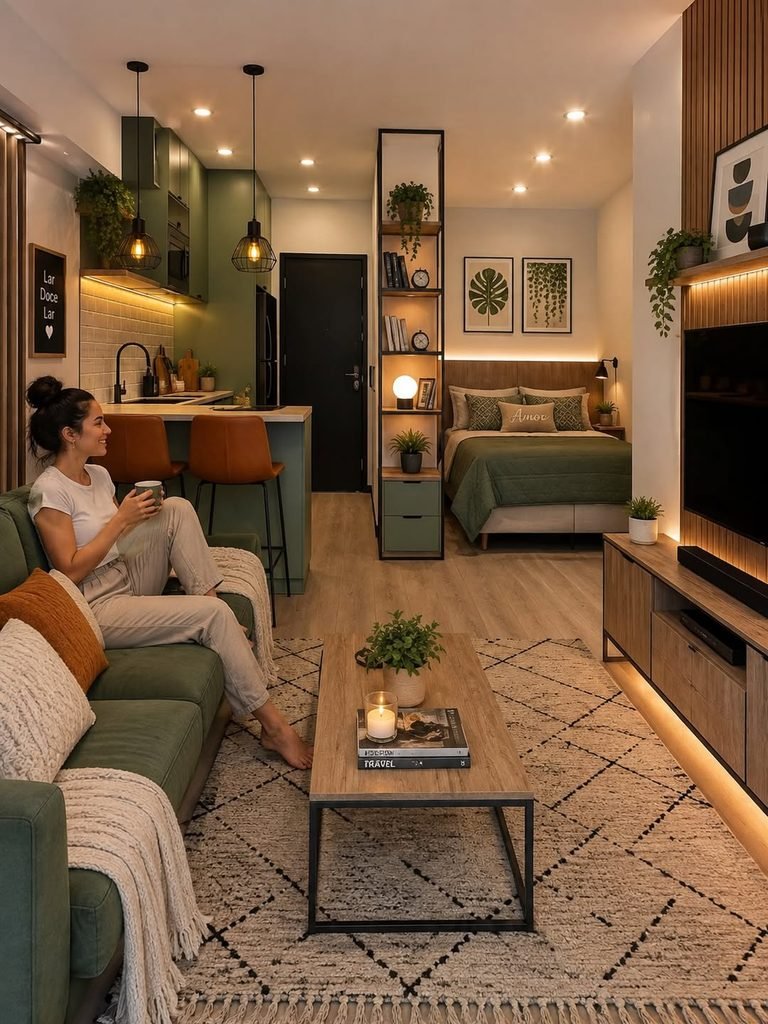
Why layout changes the feel of a room more than size does
Most small apartments have one default layout: everything pushed against the walls, with a sad empty rectangle in the middle.
It feels logical, but it often makes the room read as a hallway. The goal is to keep walkways clear and let people see as much floor as possible, because visible floor equals visible space.
How to rearrange a small living room
- Pull furniture off the wall by a few inches only if it creates a better path. Don’t float a sofa in a 10-foot-wide room. You’ll lose the walkway.
- Keep tall furniture on the shortest wall. A bookshelf on the long wall draws the eye along the entire length and makes it feel like a wall of stuff.
- Make one clear path from the door to the window. If your eye can travel in a straight line to natural light, the room feels deeper.
- Angle one piece slightly (a chair, usually) to break up the boxy feeling, but only one. Angling everything makes it look like a furniture showroom after an earthquake.
Furniture on legs vs. furniture on the floor
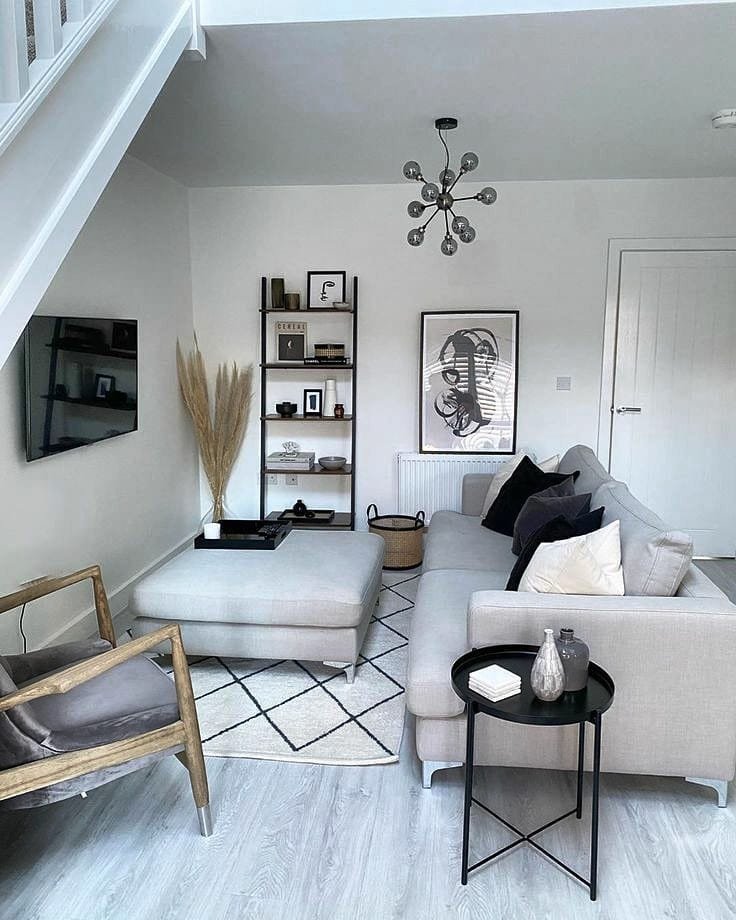
This is the most underrated trick I know. Sofas, beds, and dressers with visible legs let you see floor underneath, which tricks your brain into reading more space. My old low-slung sofa swallowed about 6 square feet of visible floor.
Swapping it for a leggy loveseat (secondhand, $140) made the room look noticeably bigger even though the footprint barely changed.
| Furniture type | Looks bigger because | Trade-off | Typical cost |
|---|---|---|---|
| Sofa with exposed legs | Shows floor underneath | Less hidden storage space | $350-$900 new, $100-$250 secondhand |
| Wall-mounted shelves | Frees floor completely | Needs drilling, so check your lease | $25-$80 per shelf |
| Glass or acrylic coffee table | Doesn’t block sightlines | Shows every fingerprint | $80-$200 |
| Storage ottoman | Replaces coffee table plus bin | Less surface area for drinks | $60-$150 |
| Drop-leaf or nesting tables | Shrinks when not in use | Wobbly if cheap | $50-$140 |
If I could only buy one thing from that table, it’d be the leggy sofa or loveseat. Everything else is a bonus.
Pro tip: Before you move a single piece of furniture, cut out paper templates the size of each item and lay them on the floor. It sounds ridiculous, but my friend Marcus tested three layouts in ten minutes this way instead of dragging a dresser around a 500-square-foot one-bedroom for an afternoon.
Saturday Afternoon: Fix Your Lighting, the Single Biggest Upgrade
Why lighting makes a small apartment feel bigger
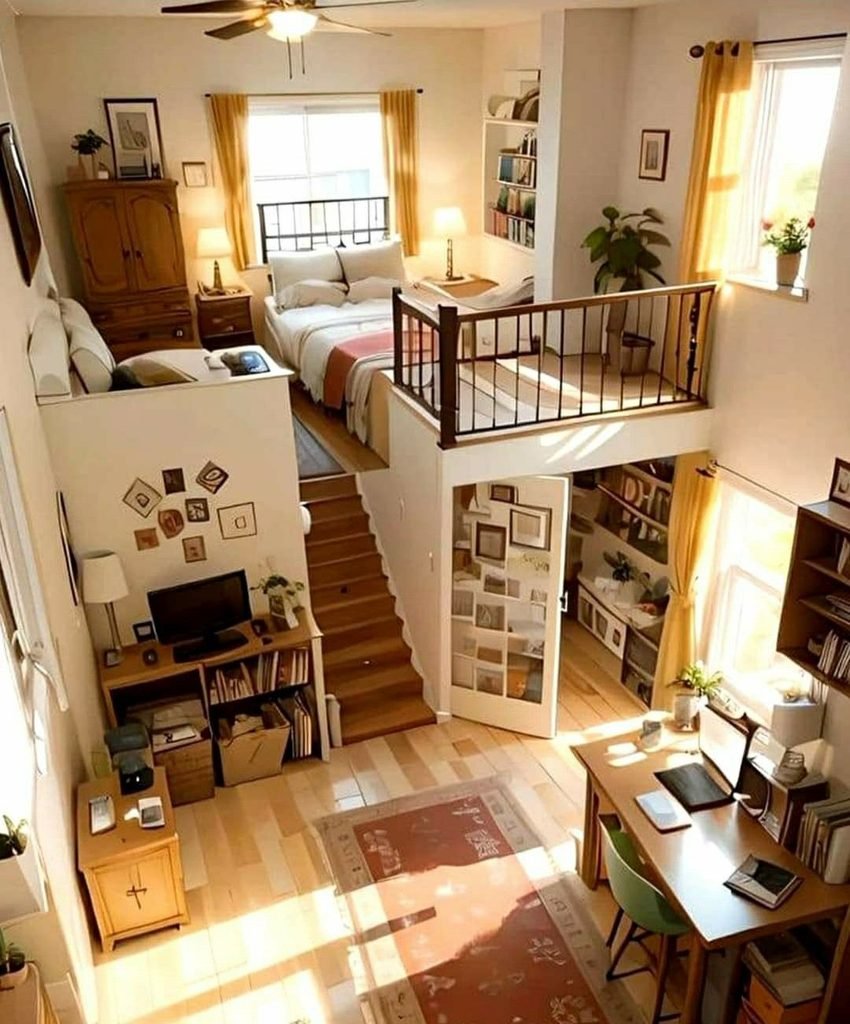
Dark corners disappear visually, which means your room’s perceived size shrinks. Most rentals come with one harsh overhead fixture that flattens everything and leaves the edges of the room in shadow. If you do nothing else on this list besides fix the lighting, you’ll still notice a real difference.
Use layered lighting instead of the overhead light
The fix is three light sources at different heights, all warm-toned:
- A floor lamp in the darkest corner. This pushes your eye to the edge of the room.
- A table lamp at mid-height, ideally on a shelf or console.
- Under-cabinet or shelf LED strips, which are the best budget upgrade in this whole post. A set of plug-in warm white LED strips runs $15-$30 and makes a kitchen feel twice as deep.
Stick with warm white bulbs in the 2700K range. I tried 4000K “daylight” bulbs once because a product page told me they’d make my place feel bright and modern. It felt like a dentist’s office. Returned them the next day.
Let in every bit of natural light
Take down anything heavy on your windows. If you need privacy, swap dark curtains for sheer white or linen-look panels hung as close to the ceiling as possible, and extend the rod several inches past each side of the window so the curtains don’t cover the glass when open.
This is one of the best renter-friendly upgrades for apartments with small windows, because it makes the window look larger and lets in more light.
Pro tip: Hang curtain rods at the ceiling line or just below the crown molding, not directly over the window frame. Curtains hung high draw the eye up and make ceilings read taller. A tension rod or an adhesive-mounted rod works if you can’t drill.
Sunday: Mirrors, Color, and the Finishing Touches
Where to put a mirror in a small apartment
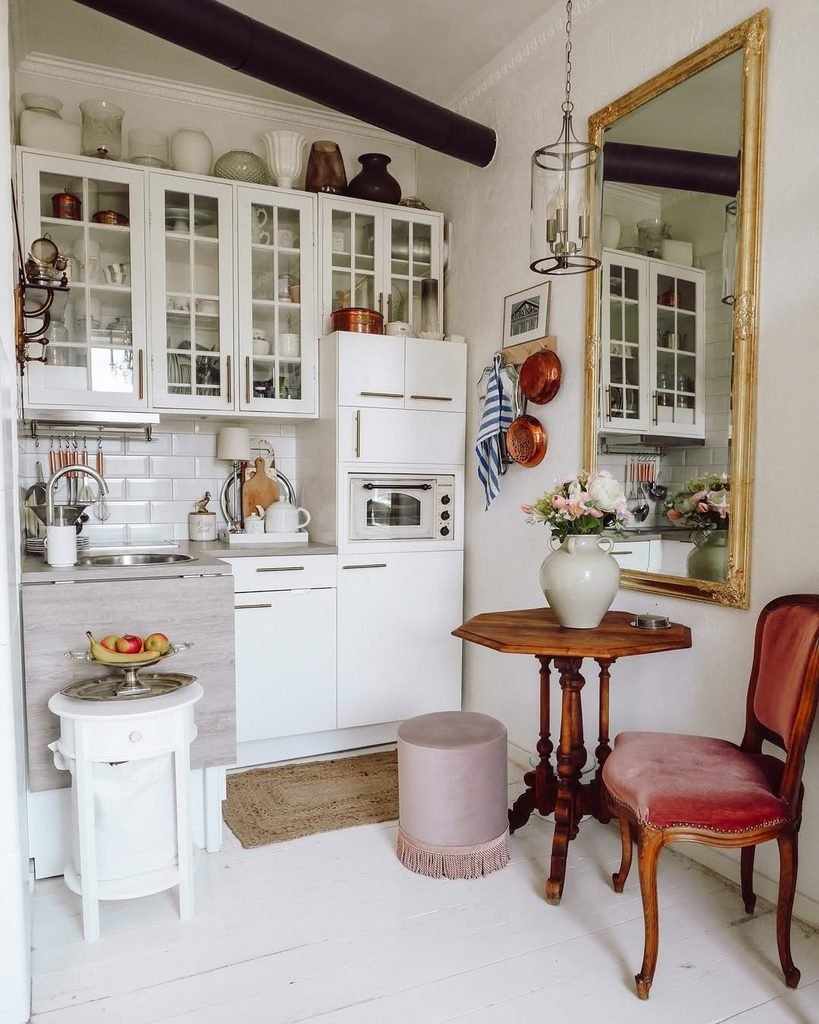
Mirrors are overhyped when placed randomly and magic when placed deliberately. The rule is to put the mirror where it reflects either a window or a pretty part of the room, never a pile of stuff. My first mirror reflected my laundry rack. Not helpful.
The best spots:
- Across from or perpendicular to a window, so it bounces daylight into the room
- At the end of a hallway or narrow entry, where it creates a sense of depth
- Leaning on the floor (a full-length mirror against a wall is $40-$90 and needs no drilling)
And go big. One large mirror beats a gallery of small ones, which creates visual clutter.
Stick to a narrow color palette
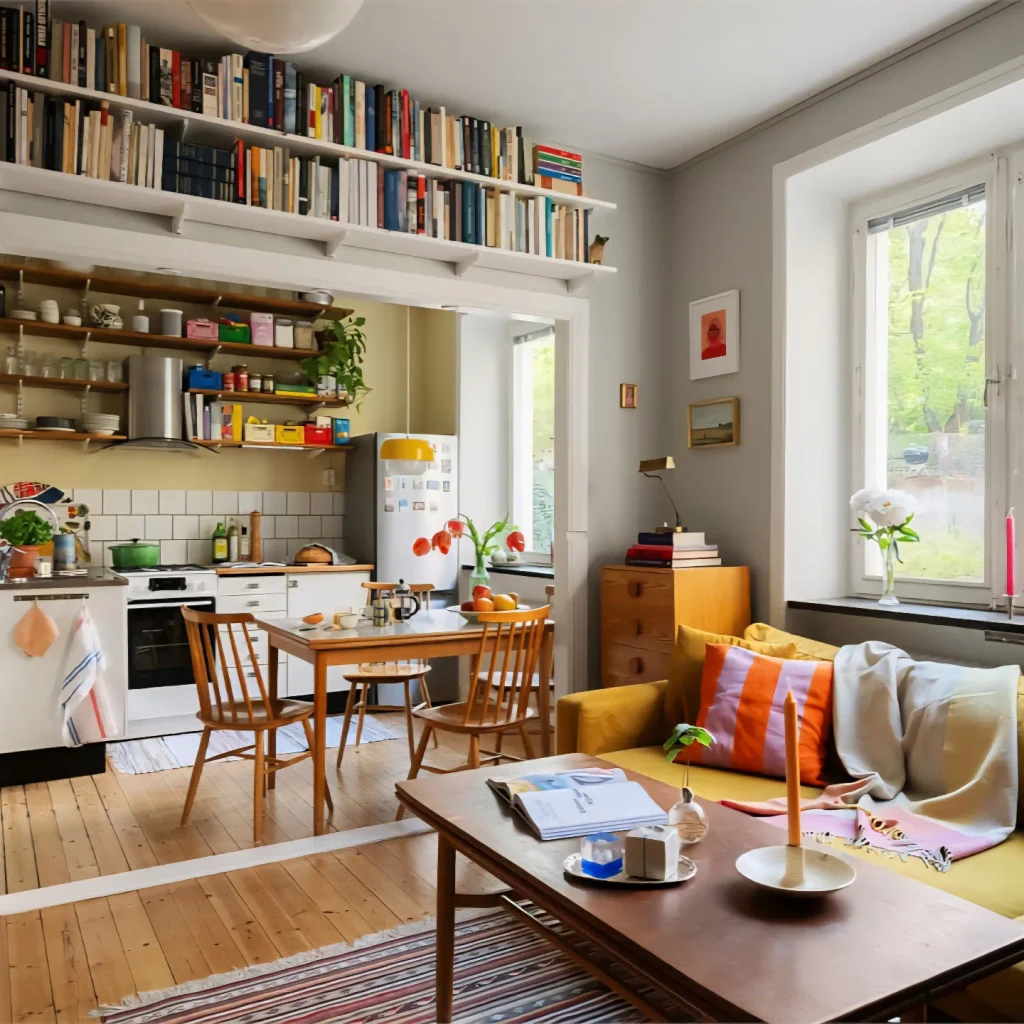
I’m not telling you to paint everything white and live in a cloud. Plenty of small apartments look great in deep, moody colors. But a room feels bigger when your eye isn’t jumping between six competing tones.
Choose two or three main colors, keep your walls and largest furniture in light-to-mid tones, and let accessories carry the contrast.
If your landlord allows painting, a soft warm white on the walls makes a bigger difference than most people expect. Just test it first.
My friend Sophia repainted her rental’s entryway closet doors twice before landing on the right white, because it turns out “white” has about 40 undertones and some of them read as hospital green in low light. Test a sample on the wall and look at it in morning and evening light before you commit.
If you can’t paint, you can fake the effect with a large light-colored rug and light bedding.
Pick the right rug size
This is the mistake I see in almost every small apartment, including my own for years. A tiny rug floating in the middle of a room chops it into smaller pieces. Go bigger than feels natural. In a living room, the front legs of your sofa and chairs should sit on the rug. A 5×8 is the minimum I’d consider, and an 8×10 often works even in a small living room, because it visually expands the floor.
A flat-weave or low-pile rug in a light neutral works best. Add a non-slip pad underneath, which also protects your floors if you’re renting.
Vertical space: draw the eye up
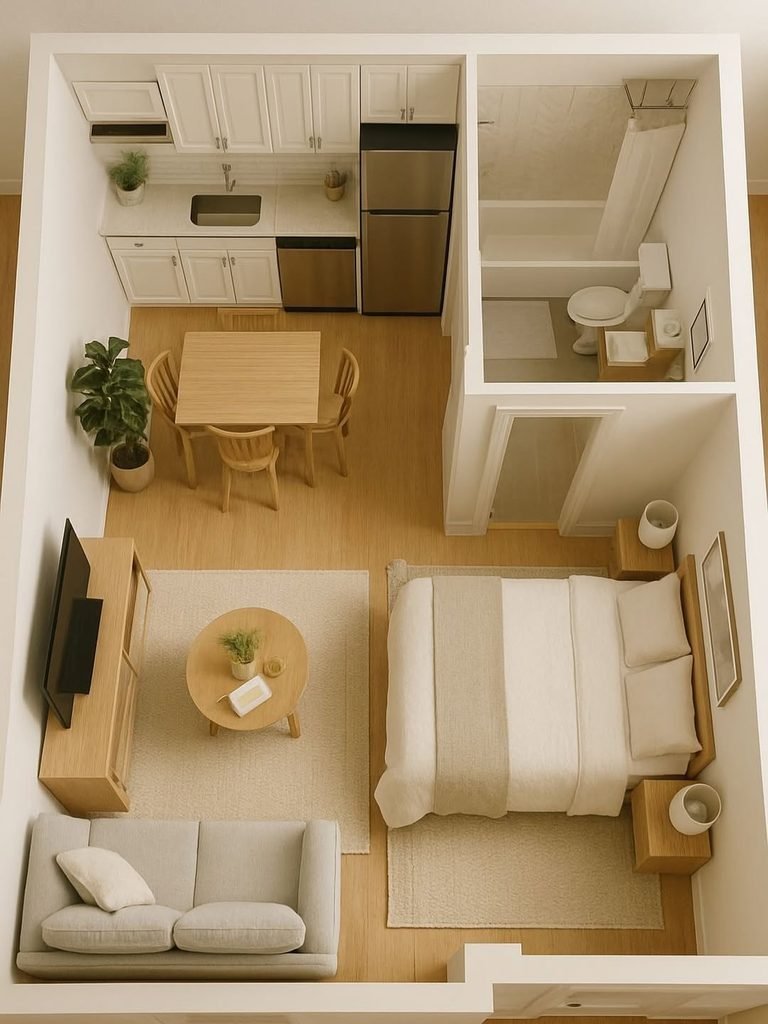
High ceilings are a luxury in small apartments, so make the most of whatever height you have. Tall, narrow bookshelves, art hung slightly higher than usual, and long curtains all lengthen the room visually.
If you’re renting and can’t drill, damage-free hanging strips can hold surprisingly heavy frames. Read the weight rating on the package and believe it.
Multi-functional furniture, but only the useful kind
I’m a little skeptical of the “hidden storage everything” trend, because a lot of it is flimsy. The pieces that have actually earned their spot in my place:
- A storage ottoman that doubles as extra seating and hides blankets
- A bed frame with drawers or enough clearance for under-bed bins
- A fold-down or drop-leaf table for dinner and a laptop desk
Skip the sofa beds unless you really need a guest option. The cheap ones are uncomfortable both ways, and I’ve seen several people quietly return theirs.
Small Bedroom, Studio, or One-Bedroom: What to Adjust
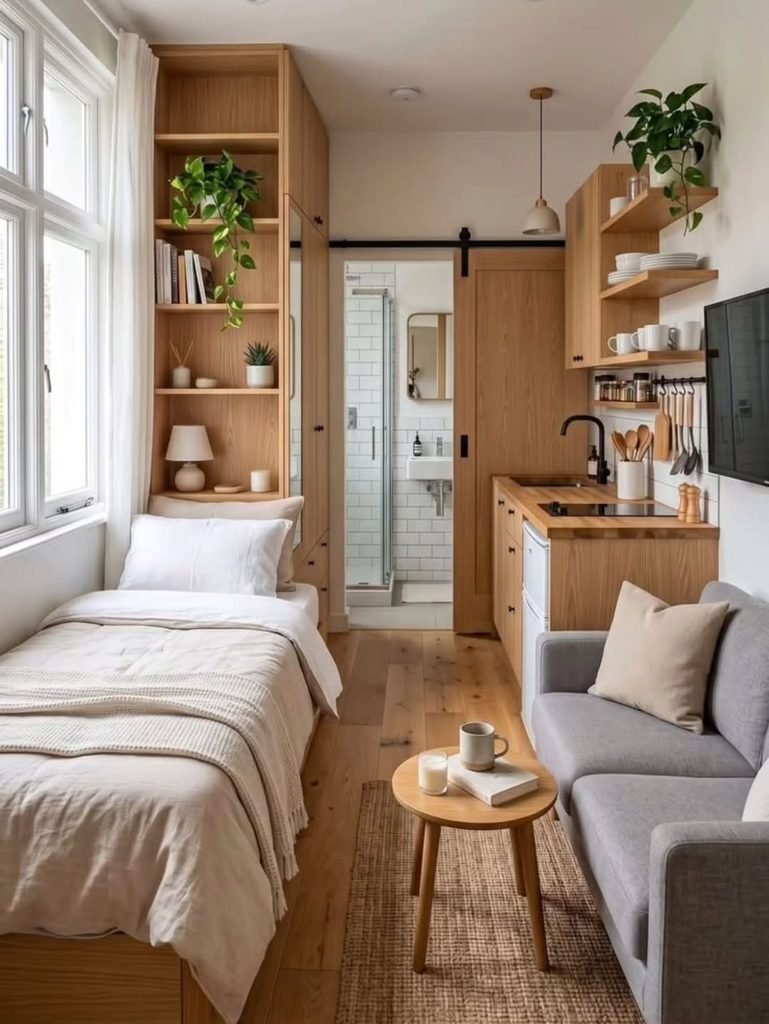
The same principles apply, but they play out differently depending on your layout.
Studio apartments: Define zones without walls. A bookshelf as a room divider, a rug under the bed, and a different lighting temperature in the sleeping area help your brain read separate rooms, which makes the whole space feel larger. Keep the divider open-backed so light passes through.
Small bedrooms: The bed is your biggest object, so put it on a frame with legs and clear out the space underneath only if you’ll actually use it for storage. Mount reading lights on the wall to free up the nightstand. If you can swap a bulky nightstand for a floating shelf, do it.
Small kitchens: Clear the counters aggressively. Anything you don’t use daily goes in a cabinet. Add LED strips under the cabinets, and consider a rolling cart that tucks into a gap when you’re not using it.
Dorm rooms: Lofting your bed is the single biggest space gain, if your school permits it. Use removable adhesive hooks, over-the-door storage on solid doors, and a mirror on the back of the door. Also, check your move-in rules before buying anything with a screw.
How Much Does This Cost? A Realistic Budget
You can do a lot for free, and you can also spend $1,000 if you get carried away. Here’s how I’d tier it.
| Budget | What you’d do | Estimated cost |
|---|---|---|
| Free | Declutter, rearrange furniture, take down heavy curtains, clear sightlines | $0 |
| Under $75 | Warm bulbs, LED strips, a leaning mirror, adhesive hooks | $50-$75 |
| $75-$250 | Everything above plus sheer curtains, a large rug, and a floor lamp | $150-$250 |
| $250-$600 | Everything above plus a leggy sofa or storage ottoman, a bigger mirror, and a rug pad | $400-$600 |
If you’re only spending money on one thing, spend it on lighting. If you have a little more, go for the rug. These two give you the best return on every dollar I’ve ever put into a small space.
Mistakes That Make a Small Apartment Feel Smaller
I’ve made nearly all of these.
- Buying furniture before measuring. Measure the doorway, the hallway, and the stairwell, not just the room.
- Using too many small decor pieces. A shelf of twenty tiny objects reads as clutter. Group them or edit down to a few meaningful ones.
- Pushing all the furniture against the walls. Sometimes it helps, but it often makes the middle of the room feel like an empty gap.
- Choosing curtains that stop at the window. Short curtains make the ceiling look lower.
- Hiding everything in open baskets. If you can see it, it still counts as clutter.
Frequently Asked Questions
Can I make a small apartment feel bigger without painting?
Yes. Lighting, mirrors, a larger rug, curtains hung high, and decluttering surfaces all do more than a paint color. If you want a color shift without painting, change your bedding, throw pillows, and rug instead.
What colors make a small apartment feel bigger?
Light, warm neutrals tend to work best because they reflect more light. That said, a small room in a dark color can feel cozy and intentional if you commit to it and keep the lighting layered.
How do I make a small apartment feel bigger if I’m renting?
Focus on things you can take with you: lamps, rugs, mirrors, sheer curtains on tension rods, and furniture with legs. Adhesive hooks and plug-in LED lighting cover most of the rest.
What’s the fastest way to make a small living room look bigger?
Clear the coffee table, turn off the overhead light, turn on two lamps, and pull the curtains fully open. It takes about ten minutes, and it’s the quickest change I know.
What I’d Do First If I Were Starting Over
If I were walking into that 410-square-foot apartment again, I’d skip the shopping and spend my first Friday night clearing every surface. Then on Saturday I’d replace the overhead bulbs with warm ones, put a lamp in the darkest corner, and take the heavy curtains down.
I wouldn’t buy anything fancy until I’d lived with those changes for a week. Most of the time, that’s all the space I actually needed. Dana was right, after all: the apartment was never too small, it was just too full and too dim.
Start with one room, set a timer, and see how it feels by Sunday night. You might be surprised how much room was hiding in there.


Leave a Reply