
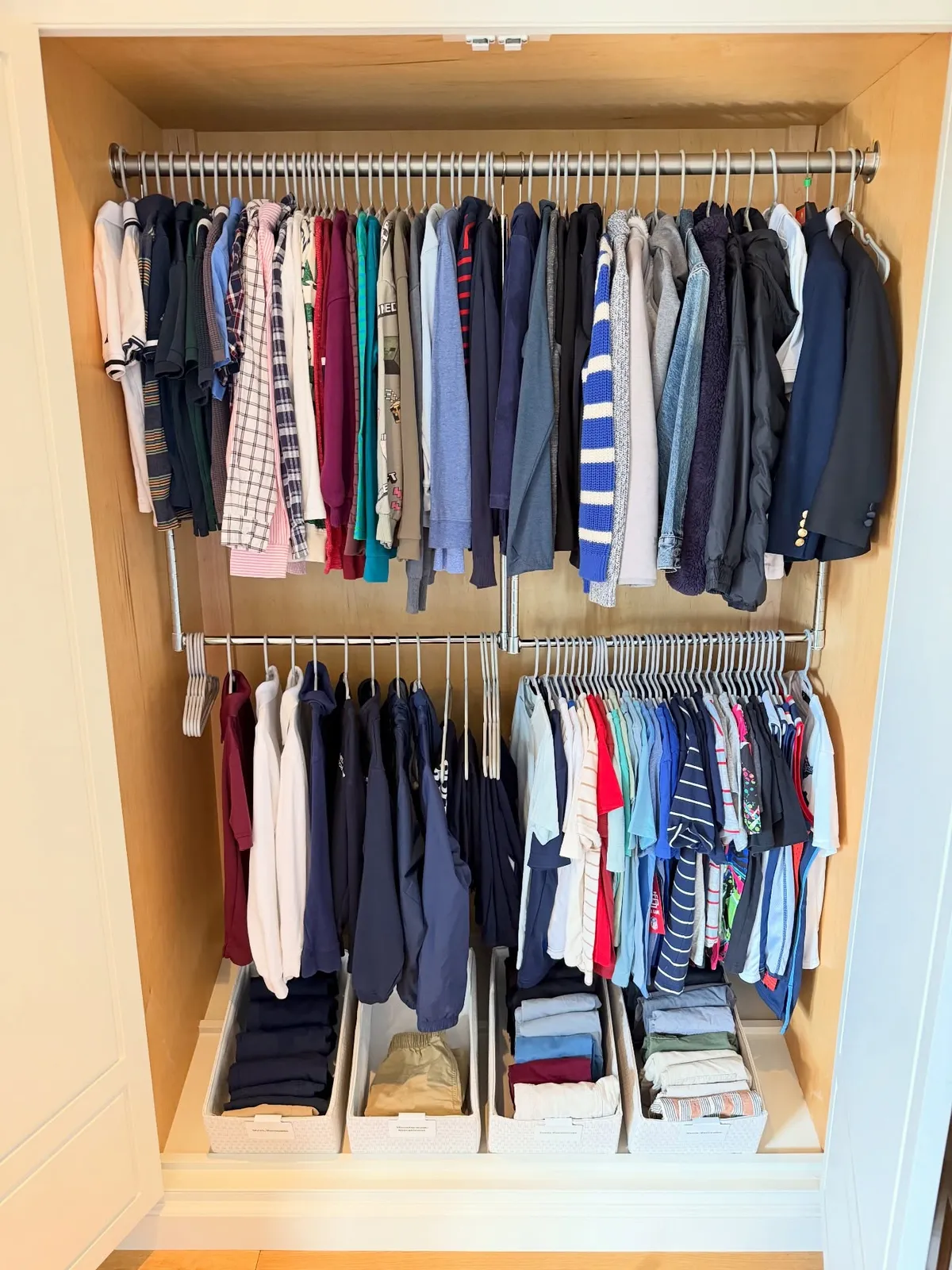
My freshman dorm closet was 22 inches wide. I measured it with a borrowed tape measure on move-in day because I couldn’t believe the number, and then I stood there holding a winter coat, a duffel bag, and about forty hangers I had not thought through at all.
By week two, my shoes lived under my desk and my sweaters lived in a heap that I called “a system.”
If you’re staring down a closet that’s basically a narrow cupboard, this is the post I wish someone had handed me.
These are the dorm room storage products for tiny closets that I’d actually buy again, plus a few that look great in photos and fail in real life. If you want more ideas for the rest of the room, my dorm room decorating ideas cover the decor side, and I’ll point you to a few other guides along the way.
A quick note on how I picked these. Every item here either goes inside the closet, hangs off it, or frees up closet space by moving something else somewhere smarter.
I also kept an eye on what most colleges actually allow, because a lot of dorms ban drilling, hanging from sprinklers, and anything that leaves a mark. That last one matters more than people think, and I’ll come back to it.

Before You Buy Anything: Measure Your Dorm Closet
This is the boring step that saves the most money. Dorm closets vary wildly.
Some are a shallow wardrobe with a single rod, some are a walk-in the size of a phone booth, and some are just an open alcove with a curtain. The three numbers you need are width, depth, and the height from the rod to the floor.
Depth is the one people skip, and it’s the one that ruins purchases. A lot of hanging organizers are built for a 22 to 24 inch deep closet, and if yours is 18, the doors won’t close. My cousin Danielle bought a four-tier shoe tower in August and returned it in September because her closet door hit it by two inches. Measure first, buy second.
Pro tip: Take a photo of your closet with the tape measure visible and keep it in your phone’s favorites. When you’re comparing products at midnight in a store aisle or a checkout page, you’ll check it constantly.
If your closet is already tight and you’re also working with a loft or bunk situation, read my guide on dorm room ideas for lofted beds alongside this one, because the space under the bed becomes part of your closet strategy.
1. Slim Velvet Hangers: The Cheapest Closet Upgrade

It sounds too simple to count as storage, but swapping bulky plastic or wooden hangers for slim velvet ones is the single cheapest way to get more room in a tiny closet.
A standard plastic hanger is roughly half an inch thick. A slim velvet one is about a quarter of that. Across 25 or 30 garments, that’s several inches of rod space you get back for around $15 to $25 for a set of 50.
The velvet grip also stops silk tops and wide-neck sweaters from sliding off, which is the real reason I stopped using the slippery plastic kind.
I’ll be honest, they won’t support really heavy items like a wool peacoat, so keep one or two sturdy hangers for outerwear.
Trade-off: Velvet hangers can leave faint fuzz on dark clothes if you buy the very cheapest ones. Go for flocked sets with solid reviews and avoid anything that sheds when you run your thumb over it.
2. Hanging Closet Shelf Organizer for Sweaters and Jeans
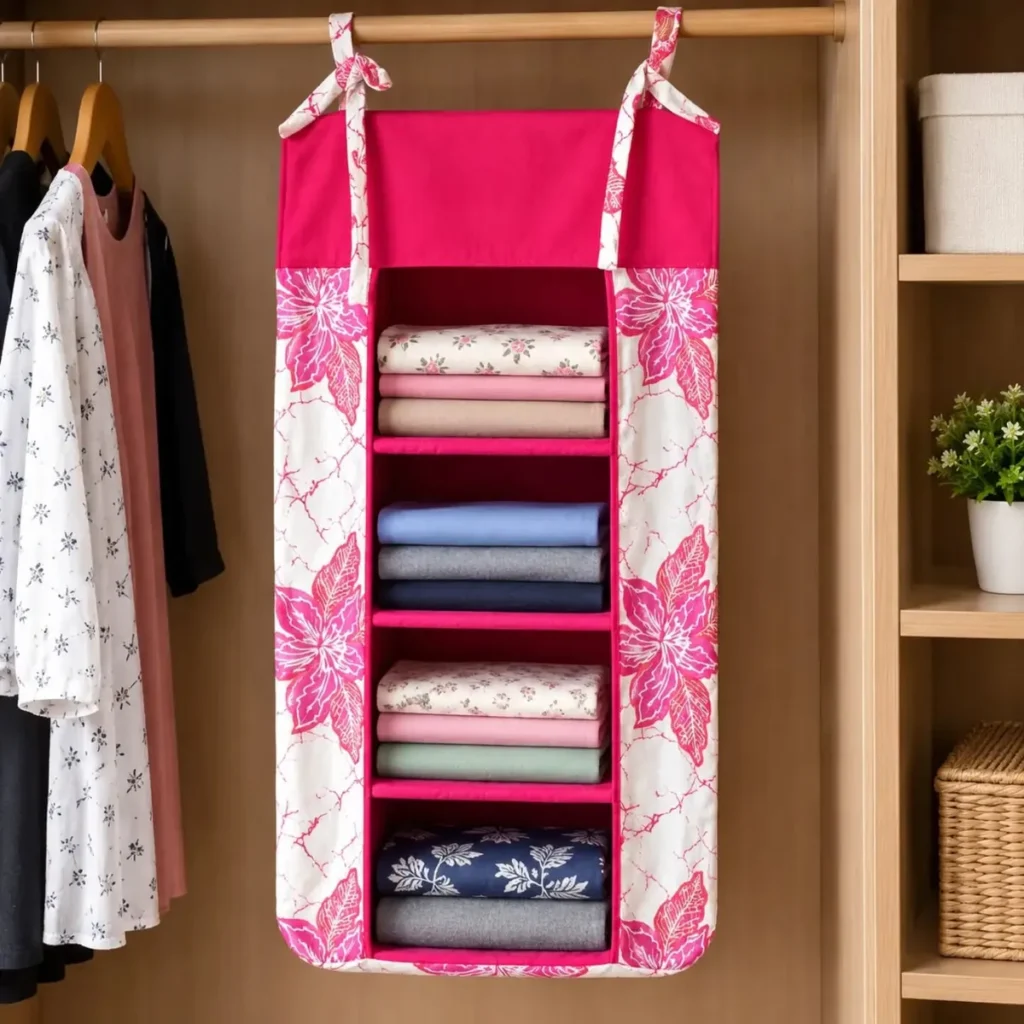
This is my pick for the one product that does the most work in a small closet. A hanging shelf organizer is a fabric tower with three to six compartments that hooks over the closet rod.
It turns the vertical air under your shirts into folded storage for sweaters, jeans, leggings, and hoodies, and it costs about $15 to $30.
Why it matters: hanging sweaters stretches the shoulders, and folding them into a drawer isn’t an option when you don’t have a dresser. This gives you a drawer without needing the floor space.
I’d choose one with a sturdy cardboard or plastic insert in each shelf, because floppy ones sag into a sad hammock when you load them.
If you’re planning your layout around colors and a cohesive look, my dorm room color scheme ideas are useful here. A neutral gray or beige organizer disappears into the closet, while a bright one becomes part of the room’s look.
Pro tip: Fold sweaters in thirds and file them on their edge like books instead of stacking them. You can see everything at once, and you stop wrecking the whole pile to pull out the one at the bottom.
3. Closet Rod Doubler for a Second Hanging Level
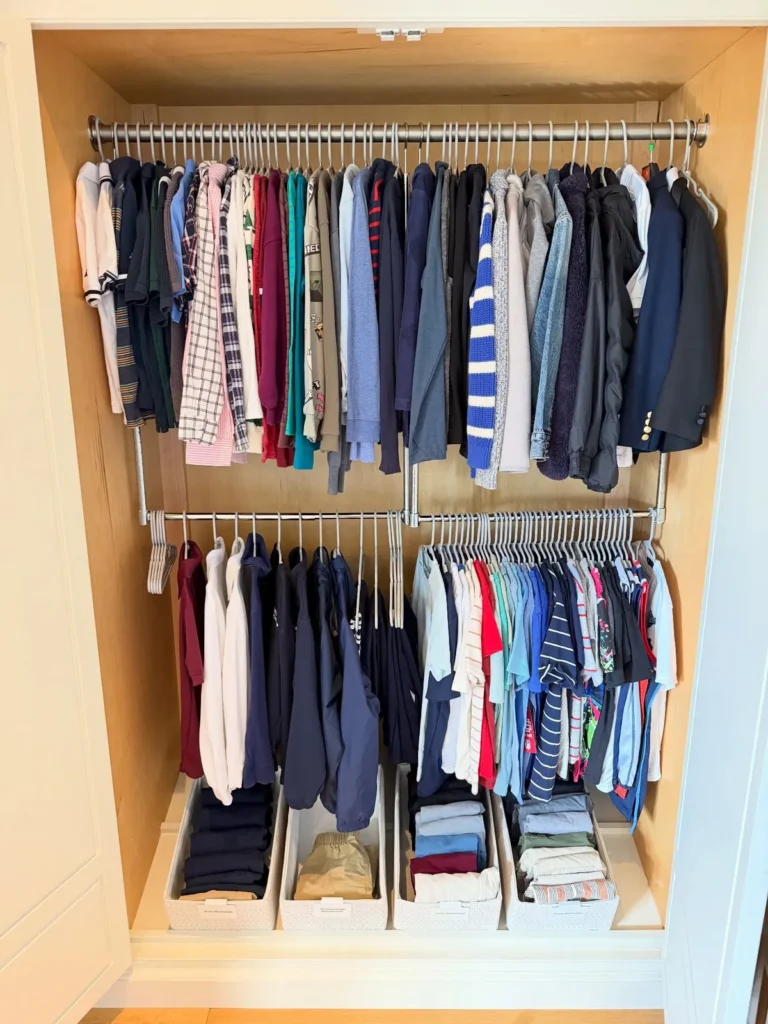
A rod doubler is a bar that hangs from your existing closet rod and creates a second rail below it. If most of your wardrobe is shirts, tops, and short dresses, you rarely need that long drop all the way to the floor.
Adding a second rail roughly doubles your hanging capacity without a single screw or nail.
Look for a version made of metal, not plastic, and make sure it states a weight limit. I’d say aim for something that holds at least 20 to 30 pounds, which covers a full set of everyday clothes. They run about $12 to $25.
Trade-off: Long coats and maxi dresses won’t fit below it. Keep one side of the rod untouched for them, and use the doubler only on the side where you hang shorter pieces.
4. Over-the-Door Organizer That Won’t Damage Anything

The back of your closet or room door is free real estate, and an over-the-door organizer is the classic way to use it.
Shoes, scarves, hair tools, toiletries, and even snacks all fit into the clear pockets. For dorm room organization on a budget, nothing beats the $10 to $20 price tag.
Here’s where I’ll warn you off. The cheapest versions use thin plastic hooks that don’t fit every door, and they scratch the paint or fall off after a week.
I learned this when a loaded pocket organizer slid off my door at 2 a.m. and woke up my entire hallway. Choose one with padded, adjustable metal hooks, or one that comes with a foam pad you can stick behind the hook.
If you live somewhere strict about holes and marks, my full guide on how to decorate a dorm room without damaging walls goes through every damage-free option I trust, including which adhesive strips are worth buying.
Pro tip: Put the heaviest items (shoes, a hair dryer) in the bottom pockets and light things up top. A top-heavy door organizer swings and bangs against the door every time you open it.
5. Under-Bed Storage Bins With Wheels
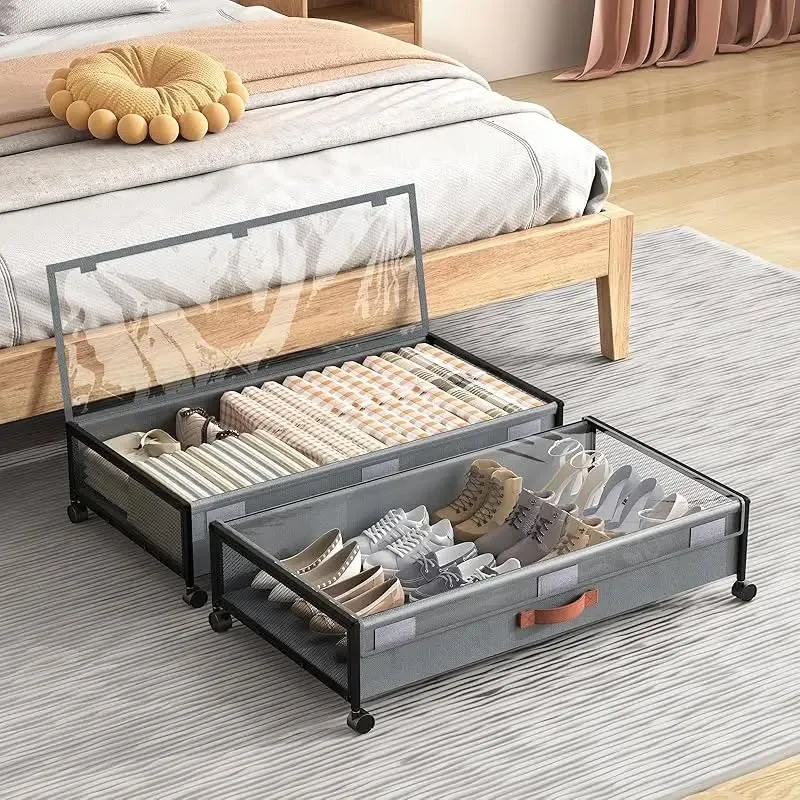
The space under a standard dorm bed is the biggest storage area in the room, and most people waste it on a pile of boxes they can’t reach.
Low, flat bins with wheels slide out without you having to lie on the floor and drag them. A set of two or three costs about $25 to $45.
Go for lidded bins so dust doesn’t settle on your off-season clothes, and measure the clearance under your bed frame first.
Most dorm beds sit 8 to 12 inches off the floor, and many “under-bed” bins are too tall for that. If your school gave you adjustable bed height, raise it before you buy.
For lofted setups, you get far more room, which is why I put together my lofted bed dorm room ideas. With a loft, you can fit a rolling dresser or a full wardrobe-style rack under there.
Trade-off: Wheels on thick carpet get stuck. If your floor has rough carpet, buy bins without wheels and use a long handle or fabric pull strap instead.
6. Bed Risers to Create More Under-Bed Space

Bed risers are small blocks that lift your bed frame by 3 to 8 inches, and they’re a quiet hero of dorm room storage for tiny closets.
Every extra inch under the bed is an inch of taller bins, boxes of out-of-season clothes, or a rolling cart that didn’t fit before. A set of four costs roughly $15 to $30.
Check your school’s housing rules first. Some colleges supply their own risers or lofting kits, and some don’t allow third-party ones.
My friend Marcus got an email during his first week asking him to remove his, so a quick message to your resident assistant can save you the hassle.
Pro tip: Buy risers with a built-in cup or slot design that holds the bed leg securely. Flat blocks can shift if you move around in bed, and nobody wants that to be their wake-up call.
7. Collapsible Fabric Cubes for Shelf and Floor Storage
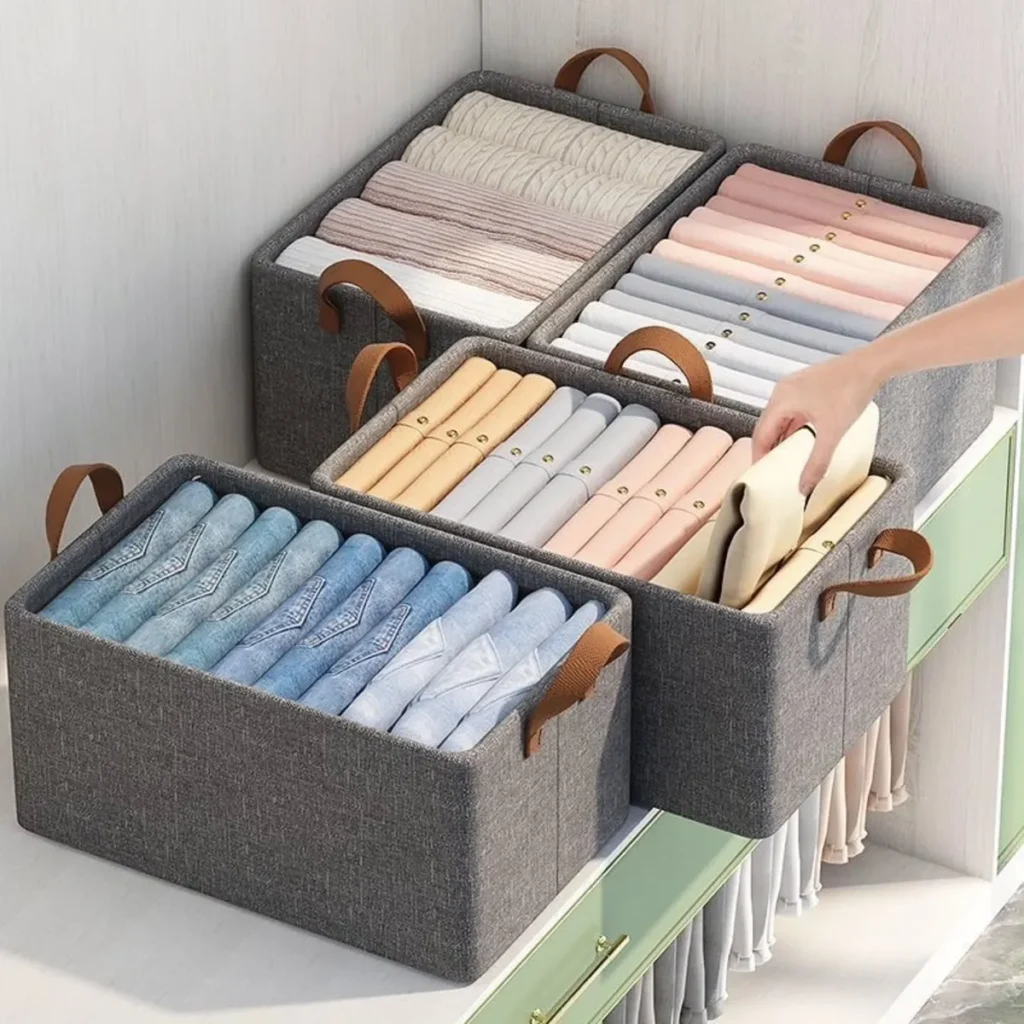
Fabric storage cubes are the all-purpose workhorse of small-space living. They fold flat when you move out, stack when you need them, and slip onto the floor of your closet or the shelf above the rod. A pack of six runs $15 to $30.
The trick is picking a size that matches your space. The 11-inch cubes are the most common and fit standard cube shelving, but a 13-inch cube is better for folded jeans and sweaters.
I’d choose cubes with a stiff base and a handle cut-out, so you can pull them off a high shelf without dumping the contents on your head.
For a deeper look at how these fit into a full room plan, my cozy small apartment ideas for winter include a few cube layouts that work just as well in a dorm, especially if you’re stuffing bulky bedding and sweaters into the same space.
Trade-off: Fabric cubes lose their shape if you overstuff them. Fill them about three-quarters full and they last the whole semester.
8. Slim Shoe Storage That Doesn’t Eat the Floor
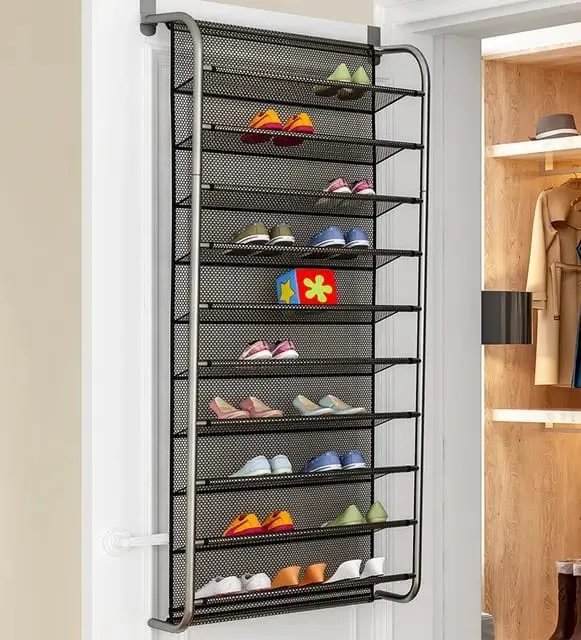
Shoes are the thing that quietly takes over a dorm. Three pairs on the closet floor becomes eight pairs by October, and suddenly you can’t open the door. For a tiny closet you have a few choices, and the right one depends on your depth.
- Hanging shoe shelves: Fabric shelves that hang from the rod. Good for flats, sneakers, and sandals, around $12 to $20.
- Over-the-door shoe pockets: Best for flats and small shoes, but they won’t hold boots.
- Slim stackable racks: Sturdy and tidy, but they need floor depth and cost about $20 to $35.
My personal pick for the tiniest closets is the hanging shelf version, because it uses vertical space and leaves the floor free for a storage bin. Just remember that heavy boots will pull the whole thing off the rod, so keep those in a bin under the bed.
Pro tip: Be ruthless about shoe count. A good rule from a reader named Jess: bring five pairs, and only swap one in when you swap one out. It sounds extreme until you see how much room you suddenly have.
9. Slim Rolling Cart for the Closet Gap

This one is my actual favorite, and it’s the one moment in this post where I’ll get a little excited.
A slim rolling cart, the kind that’s about 7 to 9 inches wide with three or four tiers, slides into the awkward gap beside a desk, a dresser, or the closet door. It holds toiletries, snacks, cleaning supplies, or accessories, and when you need it elsewhere, you just roll it out.
Mine lived beside my closet for two years, and it stored everything I didn’t want to dig through a bin to find: laundry pods, a mini sewing kit, spare chargers, tape, and a lint roller. It costs roughly $25 to $45, and the cheaper ones work fine as long as the shelves don’t flex under weight.
If you want to see how a cart fits into a whole room layout, the dorm room decorating ideas post shows a few arrangements.
And if you’re curious what’s coming in small-space design generally, I keep a running list in my small apartment design trends article.
Trade-off: Check the wheels. Cheap plastic casters squeak and jam, so look for ones that lock and roll smoothly on carpet.
10. Vacuum Storage Bags for Off-Season Clothes

When your closet is the size of a cupboard, you can’t hang or fold every season at once. Vacuum storage bags shrink bulky items like puffer coats, comforters, and winter sweaters to a fraction of their size, so they fit under the bed or on the top shelf.
A pack of 6 to 8 costs $15 to $25.
The honest limits: don’t leave down jackets and wool compressed for months, because it can damage the filling and flatten the fibers over time. Use them for a few weeks or a couple of months, not an entire year. Also, the cheap ones lose their seal over time, so check them when you pull them out.
Pro tip: Put a dryer sheet or a small cedar block inside each bag before you seal it. It keeps clothes smelling fresh when you open them three months later.
Dorm Closet Organizer Comparison: Which One Fits Your Space?
If you’re deciding between a few of these, this table sums up where each product shines and where it falls short. I’ve kept the prices to typical ranges, since they shift with season and brand.
| Product | Best For | Typical Cost | Biggest Drawback |
|---|---|---|---|
| Slim velvet hangers | More rod space for everyday clothes | $15 to $25 | Not strong enough for heavy coats |
| Hanging shelf organizer | Sweaters, jeans, and hoodies | $15 to $30 | Sags if the shelves are weak |
| Closet rod doubler | Shirts and short dresses | $12 to $25 | Blocks long garments |
| Over-the-door organizer | Accessories and toiletries | $10 to $20 | Cheap hooks can scratch or fall |
| Under-bed bins | Off-season clothes and extras | $25 to $45 | May be too tall for low beds |
| Bed risers | Creating more under-bed room | $15 to $30 | Some schools restrict them |
| Fabric cubes | Flexible shelf and floor storage | $15 to $30 | Lose shape if overfilled |
| Slim shoe storage | Keeping floors clear | $12 to $35 | Needs depth, can’t hold boots |
| Slim rolling cart | Toiletries and small odds and ends | $25 to $45 | Cheap wheels jam on carpet |
| Vacuum storage bags | Bulky winter bedding and coats | $15 to $25 | Not for long-term down storage |
How Much Does Dorm Closet Storage Cost?
You don’t need to buy all ten. Depending on your budget and how bad your closet is, here’s how I’d spend it.
The $50 Starter Setup
Slim velvet hangers, a hanging shelf organizer, and an over-the-door organizer. This trio covers hanging clothes, folded clothes, and accessories, and it fits most closets without any fuss.
The $100 Mid-Range Setup
Add under-bed bins, a rod doubler, and collapsible cubes to the starter set. At this level, a closet that held 20 items can hold nearer to 45.
The $150 Full Setup
Add bed risers, a slim rolling cart, and vacuum bags. This is overkill for most people, but if you’re sharing a small double room or moving in with a lot of winter clothing, it pays off.
If you’re trying to keep costs down, remember that many of these are easy to find secondhand at the end of a semester. Students sell hangers, bins, and carts for a few dollars on move-out week, and I’d rather buy a used cart than a new flimsy one.
Common Dorm Closet Storage Mistakes to Skip
I’ve made most of these, so you don’t have to. First, buying before measuring, which I covered above and will repeat because it’s the most expensive mistake.
Second, choosing dark, heavy storage in a closet with no light, which makes the space feel even smaller. Third, forgetting you’ll move out in May. Anything bulky and permanent becomes a problem when you have to carry it down three flights of stairs.
The fourth is the most common: bringing too much. A closet can only be organized so far. If you’ve packed three jackets, six pairs of jeans, and eleven hoodies, no organizer will fix that. Pack for the first two months and swap clothes at Thanksgiving break.
If you’re still planning the rest of your room, the dorm room color scheme ideas post will help you pick storage colors that match your bedding, which makes the whole space feel bigger and calmer.
Frequently Asked Questions
How do I maximize a tiny dorm closet?
Use all three zones: the rod, the shelf above it, and the floor below. A rod doubler, a hanging shelf organizer, and slim hangers handle the rod area. Fabric cubes handle the top shelf. Bins or a shoe organizer handle the floor. Then move anything off-season to under the bed.
What is the best dorm room storage for a small closet without a dresser?
A hanging shelf organizer is the closest thing to a dresser you can get inside a closet. Pair it with under-bed bins for extra folded clothes and you can skip furniture altogether.
Are over-the-door organizers allowed in dorms?
Usually yes, since they don’t need tools or adhesive. Check your housing handbook anyway, and use padded hooks so you don’t scratch the door.
Can I use adhesive hooks inside a dorm closet?
Often yes, but they can pull paint off if removed carelessly. Use the strips made for removable use, stretch the tab straight down along the wall to release it, and follow the weight limit on the package.
How much storage do I really need for a dorm room closet?
Less than you think. Most students use about two-thirds of what they bring. Start with the $50 setup and add pieces only after the first two weeks, once you know where the real problems are.
What should I leave at home when my dorm closet is tiny?
Extra shoes, out-of-season coats, bulky blankets, and anything you haven’t worn in the past year. You can always bring things back at winter break.
What I’d Do First If I Were Starting Over
I’d measure the closet, buy slim velvet hangers and one hanging shelf organizer, and then wait. Honestly, I’d live in the room for two weeks before buying anything else, because the first fix is usually obvious once you’ve dealt with the closet door a few times.
Then I’d get the under-bed bins and the slim rolling cart, which are the two pieces that made my dorm feel like a real room.
A tiny closet is annoying, but it’s also solvable. With the right dorm room storage products for a small closet, you can fit more in than you’d expect, and you won’t need a drill to do it.


Leave a Reply