
My first dorm room was 11 by 13 feet, shared with a roommate who owned a surprising number of shoes, and by the second week I had stubbed my toe on a storage bin so many times that I started naming it.
That room taught me something nobody mentions in the glossy move-in checklists: the right dorm room gadgets for small spaces do more than the right decor ever will.
Most lists of dorm essentials are just a shopping cart in disguise. This one is different, because every item below solves a specific small-space problem: no outlets, no light, no closet, no privacy, no floor.
If you’re still working out the overall look, my guide to decorating on a budget pairs well with this one, and the dorm room color scheme ideas post will help you pick gadgets in colors that don’t fight each other.
I’ll tell you what each gadget costs, where it falls short, and who should skip it. One quick warning before you click anything: dorm rules vary wildly by school.
Some ban extension cords, some ban kettles, and nearly all ban anything with an open heating element. Check your housing handbook first, because returning a pile of banned items on move-in day is miserable.
Quick Comparison: Which Dorm Gadgets Are Worth Your Money?
If you’re skimming, start here. Prices are rough ranges from what I’ve seen at big-box stores and online, so treat them as ballparks.
| Gadget | Typical Cost | Space Problem It Solves | Skip It If |
|---|---|---|---|
| Adjustable bed risers | $20 to $40 | No storage | Your bed is already lofted |
| Flat-plug surge protector | $15 to $30 | Not enough outlets | Your school bans power strips |
| Clip-on desk lamp | $12 to $25 | No desk space | You have a built-in desk light |
| Vacuum storage bags | $15 to $25 | Bulky bedding and coats | You have a full closet |
| Over-the-door organizer | $15 to $35 | Cluttered floor | Your door is a thin hollow one |
| Slim rolling cart | $25 to $50 | Awkward gaps | You have no gap wider than 6 inches |
| Foldable laptop stand | $15 to $30 | Neck pain and desk clutter | You mostly study in the library |
| Adhesive wall hooks | $8 to $15 | Nowhere to hang things | Your walls are textured cinderblock |
| LED strip lights | $12 to $25 | Harsh overhead lighting | Your RA has strict wall rules |
| Clip-on fan | $15 to $30 | Stuffy rooms, no AC | You live in a cold climate |
| Compact electric kettle | $20 to $35 | No kitchen access | Your hall allows only microwaves |
| White noise machine | $20 to $40 | Zero privacy | You sleep through anything |
| Clip-on bedside caddy | $10 to $20 | No nightstand | Your bed has a built-in shelf |
1. Adjustable Bed Risers With Built-In Outlets
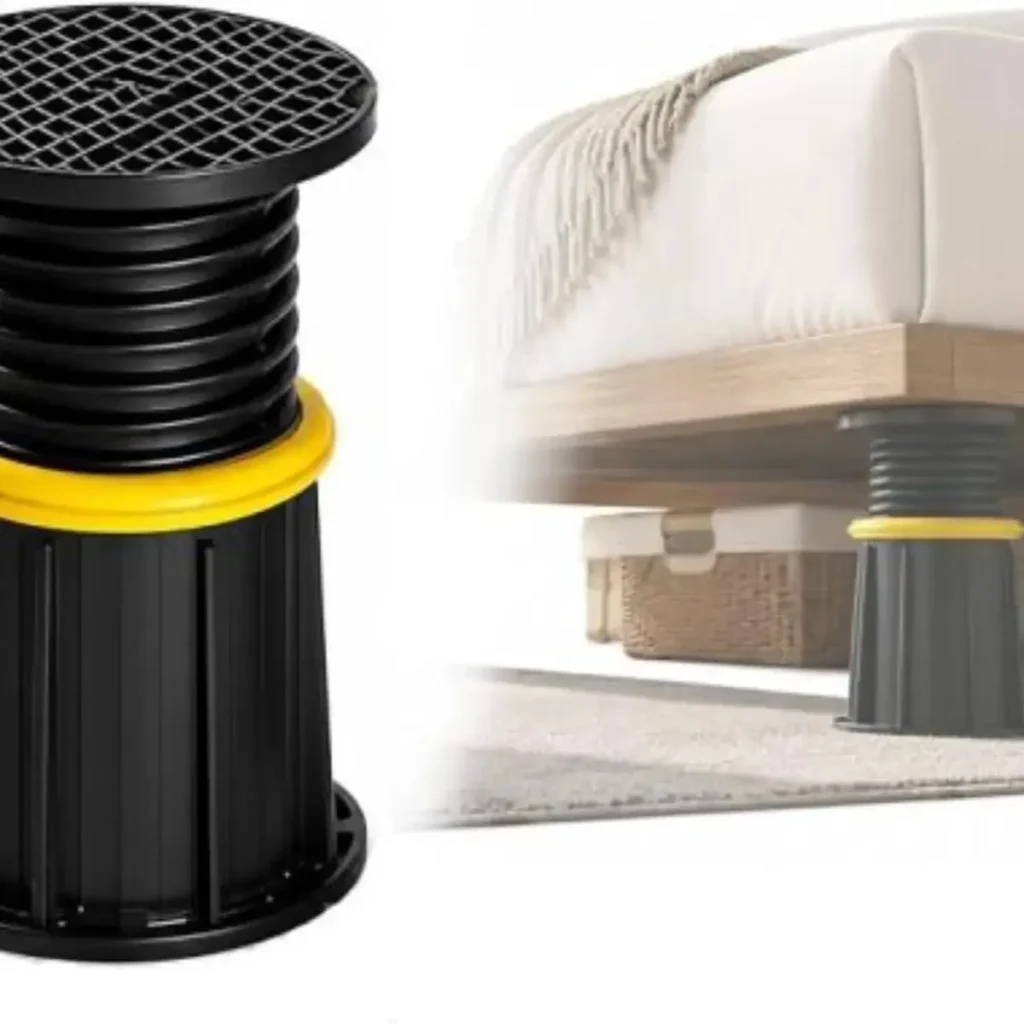
The space under a standard dorm bed is the single biggest storage opportunity in the room, and most people waste it by leaving a few inches of height.
Risers lift the bed so that storage bins, a mini fridge, or even a small dresser can slide underneath. Many dorm beds already have adjustable height, but if yours is fixed, risers are the cheapest fix.
Look for the kind with a built-in outlet strip and USB ports on the side. They cost a bit more, usually $30 to $40, but you get a charging spot right at pillow height.
Choose the 8 inch versions if your school allows it and you’re under 6 feet tall, because beyond that you start needing a stepstool.
Pro tip: measure your bins before you buy the risers, not after. I once bought 6 inch risers and 7 inch bins, which is exactly as embarrassing as it sounds. And if your bed can go full loft, my walkthrough on how to loft a dorm bed will give you even more floor space than risers can.
2. Flat-Plug Surge Protector for Dorm Outlets
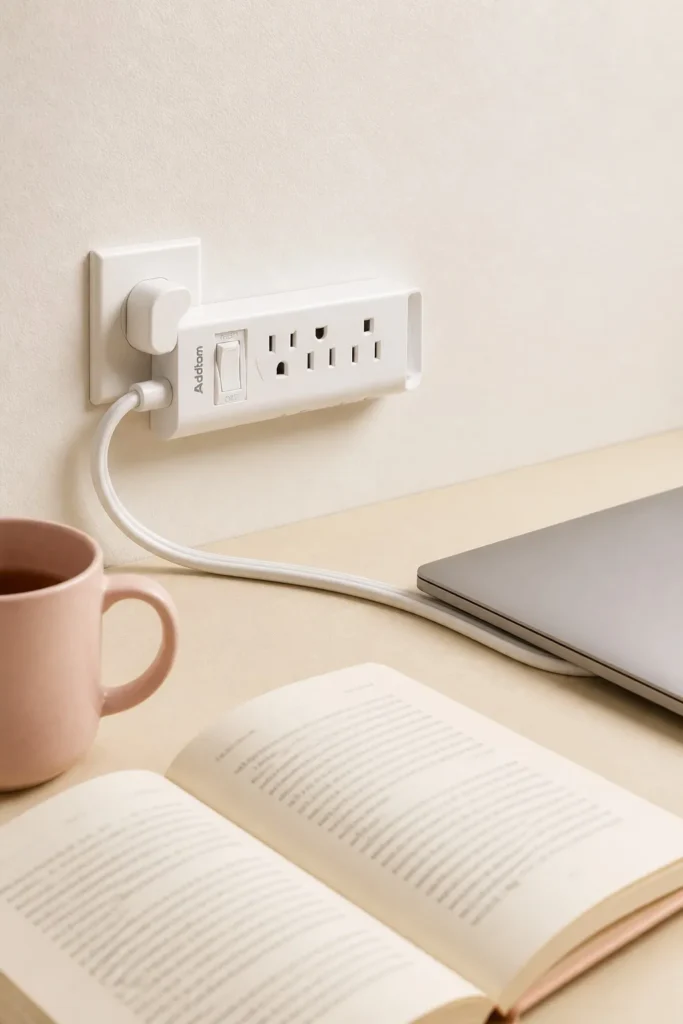
Most dorm rooms have two or three outlets, usually in the least useful spots. A surge-protected power strip with a flat, right-angle plug sits flush against the wall so it doesn’t block furniture, and it gives you the 6 or 8 outlets you really need for a laptop, phone, lamp, and fan.
The word “surge protected” matters here. A basic power strip is just an extension cord with extra holes, and many schools ban those specifically.
A UL-listed surge protector with a built-in circuit breaker is usually allowed, but get it in writing from your housing office if you’re unsure.
Pro tip: buy one with USB-C ports built in and a 6 foot cord. A 3 foot cord sounds fine until your only outlet is across the room from your desk.
3. Clip-On Desk Lamp When You Have No Desk Space

Here’s my one big favorite in this whole post. A clip-on LED lamp changed how I studied. My dorm desk was basically a ledge, and a regular lamp took up a third of it.
A clip-on version grips the edge of the desk, the bed frame, or the bookshelf, and the neck bends exactly where you need light.
Look for one with adjustable color temperature, so you can run warm light at night and cooler light during the day. Skip the ones with a flimsy plastic clamp.
A metal clamp with rubber padding holds up and won’t scratch the desk, which matters on move-out day.
Pair it with soft overhead alternatives and you may never need the harsh ceiling light again. If you’re sharing the room, check my ideas for decorating a shared dorm room so your lighting choices work for both of you.
4. Vacuum Storage Bags for Bulky Bedding and Winter Coats

Vacuum-seal bags are the best small dorm room organization trick for anyone moving in during August and bringing a puffy winter coat for November.
They shrink comforters, sweaters, and pillows down to about a third of their size, so they slide under the bed flat.
The trade-off is real, though. Down and feather fills can get permanently crushed if they stay compressed for months, so use these for synthetic bedding and off-season clothes, not your good duvet.
My friend Priya learned that when her down comforter came out of a bag looking like a pancake and never quite recovered.
Pro tip: buy the kind with a zipper seal that works without a vacuum cleaner. You can roll the air out by hand, and you won’t have to borrow a vacuum from the RA closet.
5. Over-the-Door Organizer That Won’t Fall Off
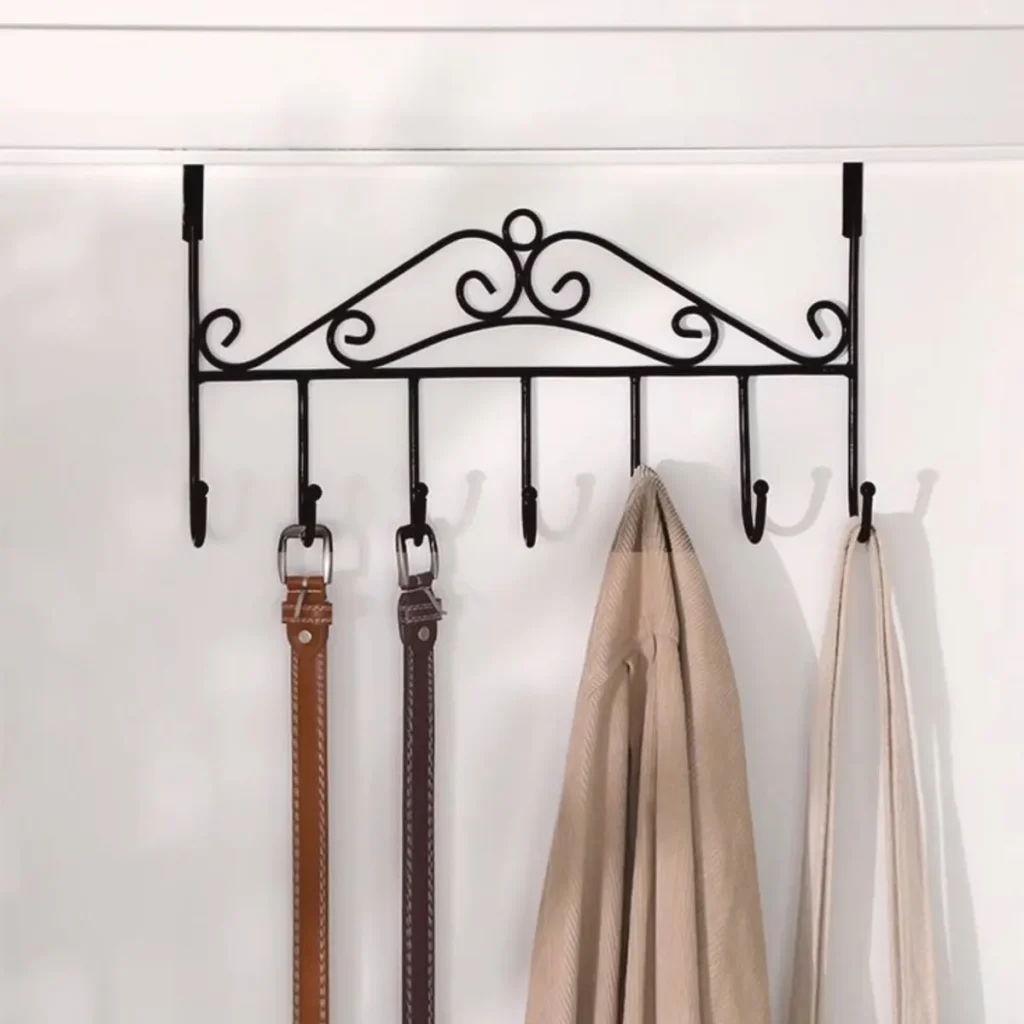
I’ll be honest: I tried the cheap hook-style over-the-door rack first, and it fell within a week, taking a bottle of shampoo and my dignity with it.
The fix is to look for a model with a steel frame and padded hooks, and to measure your door thickness before ordering. Most dorm doors are 1.75 inches thick, but older buildings vary.
Use it for shoes, toiletries, snacks, or cleaning supplies. The pocket-style ones are great for shoes because they get them off the floor, which is a huge win in a room where every square foot counts.
If closet space is your real problem, the over-the-door rack works best alongside the tips in how to organize a dorm closet, which covers hanging, folding, and stacking in a tiny wardrobe.
6. Slim Rolling Cart for Awkward Gaps

Every dorm room has one dead zone: the gap between the desk and the wall, or the sliver beside the dresser. A slim 3 tier rolling cart, usually 6 to 9 inches wide, turns that gap into a snack pantry, a skincare station, or a school supply shelf.
The wheels matter more than you think.
Cheap casters make the cart wobble, so look for ones that lock. I like carts with a mesh basket design, because you can see what’s in each tier without pulling everything out.
Honest trade-off: a rolling cart that holds heavy items like canned food or a laptop can tip if the bottom tier is empty. Put the heaviest stuff low, always.
7. Foldable Laptop Stand for Small Desks

A laptop stand is one of those dorm room must haves that sounds like a luxury until your neck hurts at 2 a.m. during finals. It lifts the screen to eye level, frees up the space under the laptop for notebooks, and folds flat so it fits in a backpack.
Aluminum stands run hot less often than plastic ones, since the metal helps pull heat off the laptop. You’ll pay $20 to $30 for a good one.
Pair it with a $15 wireless keyboard and you’ve basically built an ergonomic workstation on a desk the size of a cutting board.
Pro tip: choose a stand with at least 4 height settings. Your needs change between typing an essay and watching a lecture on your bed.
8. Adhesive Wall Hooks (The Right Kind)
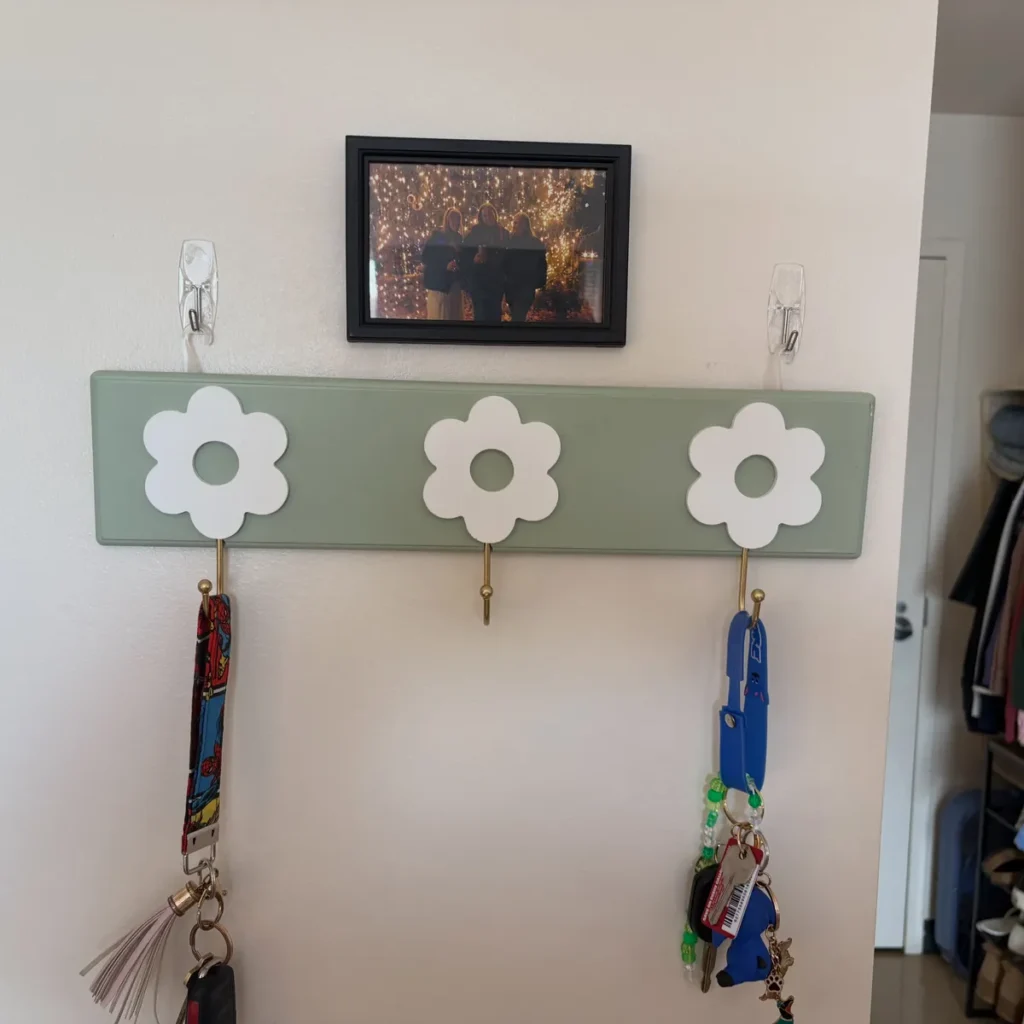
Hooks are the cheapest way to add vertical storage without a single drill hole. Use them for bags, jackets, lanyards, towels, and headphones. The cost for a multi-pack is usually under $15.
The catch is that not all adhesive is equal. Removable strip hooks from reputable brands hold well on painted drywall and smooth surfaces, but they fail on textured cinderblock and sometimes peel paint when removed too fast.
Pull the tab slowly and parallel to the wall, not outward, and wait an hour after sticking them on before hanging anything heavy.
If you’re trying to dress the walls on top of all this, my post on small space design trends has ideas that translate well to a dorm, especially for vertical storage and multipurpose pieces.
9. LED Strip Lights for a Softer Room

Dorm overhead lights are famously unflattering. A strip of warm white LEDs under a shelf, behind the desk, or along the bed frame softens the whole room and adds a bit of personality without taking up any floor space.
Skip the rainbow color-changing strips unless that’s genuinely your style. In my experience, a warm white strip looks more expensive and more cozy, and it won’t annoy a roommate trying to sleep.
Check that the strip has a USB plug or a plug-in adapter, so you aren’t hunting for another outlet.
A reader named Tasha emailed me last fall to say her LED strips kept falling off the cinderblock. She fixed it by sticking the strips on a thin foam board first, then hanging the board. That’s smarter than anything I’d come up with.
10. Clip-On Fan for Dorms Without AC
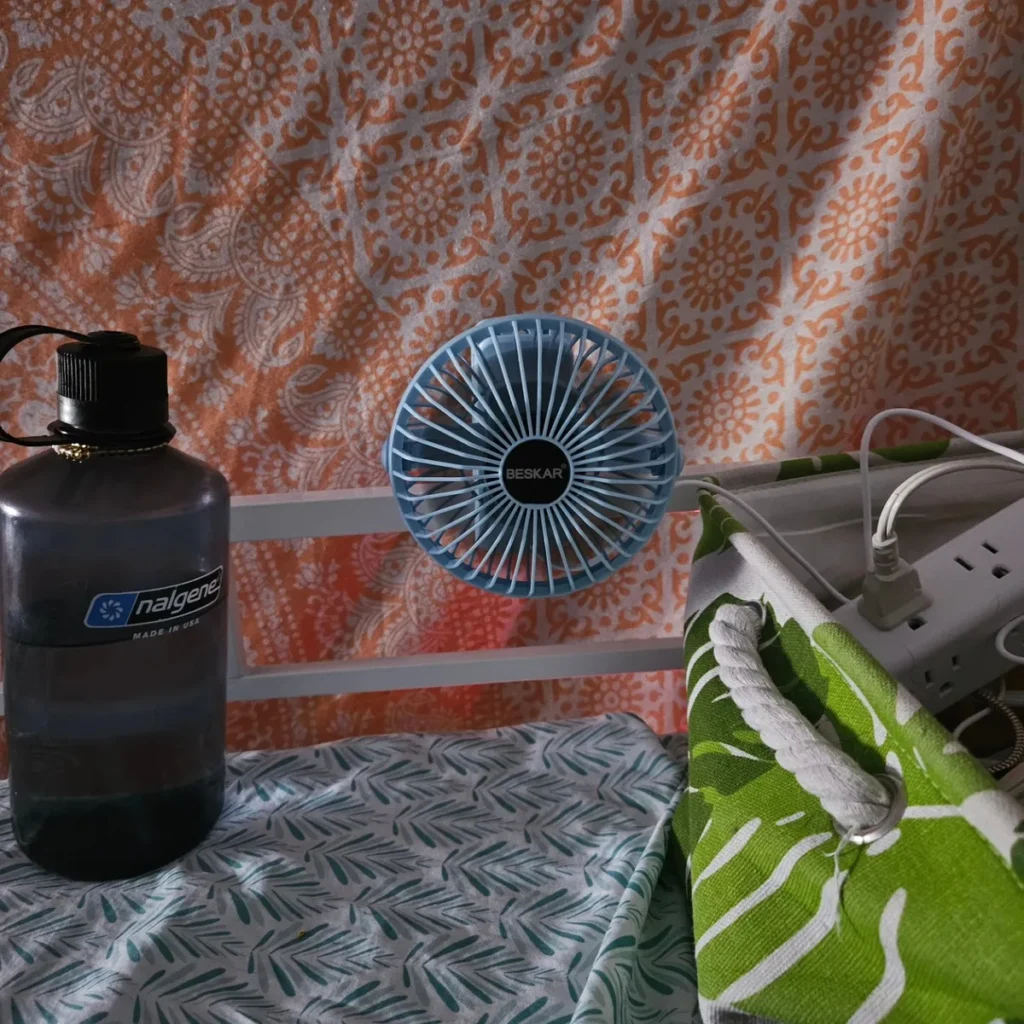
Many older dorms have no air conditioning, and August through October can feel like living in a sock.
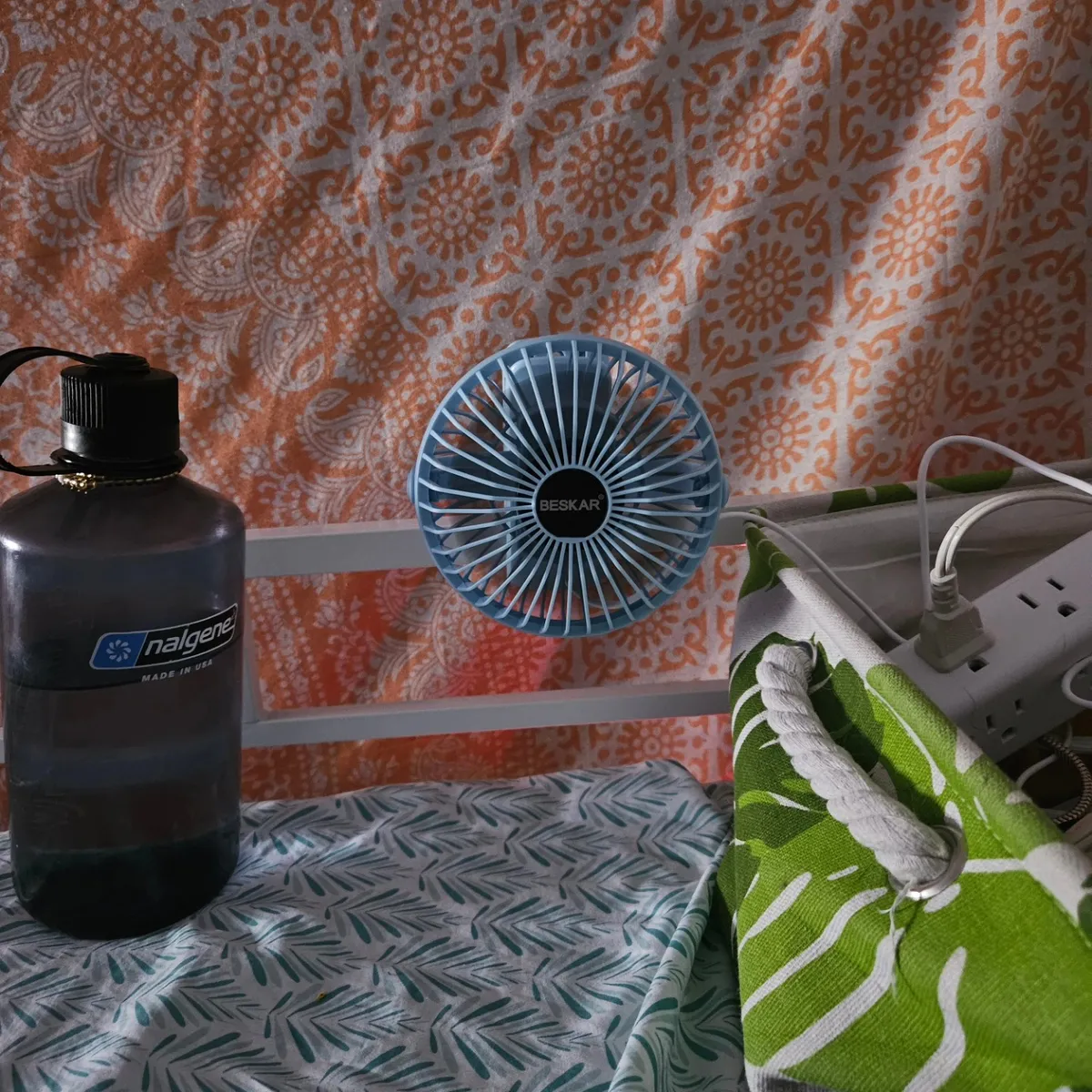
A clip-on fan attaches to your bed frame, desk, or bookshelf, and it points the airflow directly at you without eating any desk space.
Look for one with a rechargeable battery, because it means you can use it without hunting for an outlet. Quiet matters a lot here, especially in a shared room.
Anything with a visible “turbo” mode will probably sound like a small aircraft on the highest setting.
Pro tip: put the fan near an open window at night and point it outward. It pulls hot room air out and does a better job than pointing it at your face.
11. Compact Electric Kettle With Auto Shutoff

A small kettle is the most useful kitchen item you can own in a dorm. It handles instant oatmeal, ramen, tea, hot cocoa, and pour-over coffee, which covers about 80 percent of dorm cooking. A 0.5 to 1 liter model is plenty for one person.
This is the gadget most likely to be banned, so check first. Schools that allow kettles almost always require auto shutoff and a closed heating element, and many require it be UL-listed.
A foldable silicone kettle that collapses to about 2 inches tall is brilliant for small spaces, though it heats more slowly than a standard one.
If your hall bans kettles, a microwave-safe mug with a lid works as a decent backup, and you won’t run into any rule problems.
12. White Noise Machine for Shared Dorm Rooms
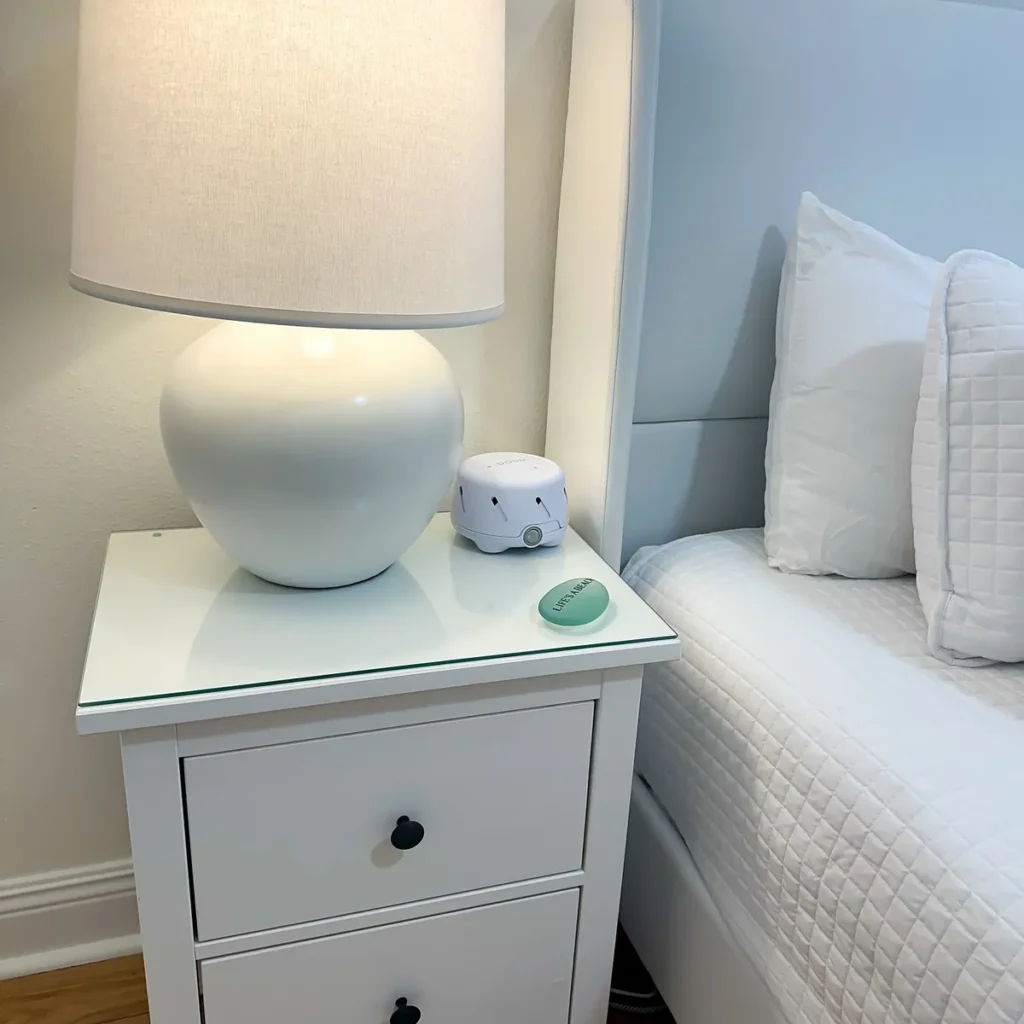
I resisted buying one for most of freshman year, and I regret every sleepless night in between. A white noise machine masks hallway chatter, roommate typing, and the guy next door who treats 1 a.m. as practice time for his trombone. It works better than earplugs for a lot of people, since you can still hear your alarm.
Get the small, USB-powered kind with at least a few sound options, like fan, rain, and brown noise.
Brown noise is deeper and softer than white noise, and many people find it much less irritating. The cost is $20 to $40 for a decent one, and it’s the best sleep upgrade I can recommend for shared rooms.
Pair it with a sleep mask and you’ve created a private sleeping zone in a room that has no privacy. For more ways to make a shared room work for two people, my shared dorm room decorating ideas cover layouts and dividers.
13. Clip-On Bedside Caddy for Lofted or Bunked Beds

If you have a loft bed, a bunk, or a bed with no nightstand, a clip-on bedside caddy solves a very specific, very annoying problem: where do your phone, glasses, water bottle, and charger go at night? The caddy hooks over the bed rail or mattress edge and holds all of it within arm’s reach.
Fabric versions are cheapest, usually $10 to $15, while wooden or metal shelf versions run closer to $20.
I prefer the shelf kind for loft beds, since it holds a water bottle without tipping. Check that it fits your bed rail thickness, because dorm frames are usually thicker than standard ones.
If you’ve lofted your bed, the extra floor space underneath is yours to use. The dorm bed loft guide walks through safe heights and what fits underneath.
How Much Do Dorm Room Gadgets Cost Altogether?
If you bought all 13, you’d spend roughly $230 to $420, depending on how many you upgrade. That’s too much for most students, so here’s how I’d prioritize on a real budget.
| Budget | What I’d Buy | Approximate Total |
|---|---|---|
| Under $60 | Flat-plug surge protector, clip-on lamp, adhesive hooks, bedside caddy | $45 to $85 |
| Around $120 | Everything above, plus over-the-door organizer, white noise machine, clip-on fan | $100 to $175 |
| Full setup | All 13 items, with better versions of the lamp, kettle, and bed risers | $230 to $420 |
Buy the first tier before move-in, then wait two weeks to see what your room actually needs. Most of the regret purchases I’ve seen come from people who bought a full cart of stuff before they’d even met their roommate.
Final Thoughts: What I’d Buy First If I Were Starting Over
If I were moving into a tiny dorm tomorrow, I’d buy the surge protector, the clip-on lamp, and the white noise machine, in that order, and I’d have them in the room before my parents left.
Those three fix the problems that make a small room feel unlivable: not enough power, not enough light, and no peace.
Everything else can wait until you know how the room feels. The best dorm room gadgets for small spaces aren’t the cutest or the most viral.
They’re the ones you stop noticing because they quietly solve something every day. If you want help with the bigger picture, my budget decorating guide covers the parts gadgets can’t fix.
Frequently Asked Questions About Dorm Room Gadgets
What are the most useful dorm room gadgets for small spaces?
The ones that fix power, light, and storage first: a flat-plug surge protector, a clip-on desk lamp, bed risers, and an over-the-door organizer. These four free up the most space and solve the most common small-room frustrations.
Are electric kettles allowed in dorms?
It depends on your school. Many allow them if they have auto shutoff and a closed heating element, while others ban them completely. Check your housing handbook or email the housing office before you buy.
Can I use a power strip in my dorm room?
Often yes, but usually only a surge-protected one with a built-in circuit breaker. Basic extension cords and daisy-chained strips are commonly banned because of fire risk, so confirm the rules first.
How do I add storage to a dorm room without drilling?
Use adhesive hooks, over-the-door organizers, bed risers, and slim rolling carts. All of them work without damaging walls, and they come off cleanly at move-out if you remove adhesive slowly.
What’s the best way to organize a tiny dorm room on a budget?
Go vertical first: hooks, door organizers, and under-bed storage. Then add one or two flexible pieces like a rolling cart. Spend the most on the items you use daily, like your lamp and surge protector, and go cheap on the rest.
Do LED strip lights damage dorm walls?
They can peel paint if the adhesive is too strong or removed too quickly. Stick them on a thin board or use removable mounting tabs, and pull slowly at move-out. Check your housing rules too, since some halls restrict wall adhesives.
Is a white noise machine worth it in a dorm?
For shared rooms and noisy halls, yes. It masks the sudden sounds that wake you up, and it’s much easier on your ears than sleeping with earbuds in.


Leave a Reply